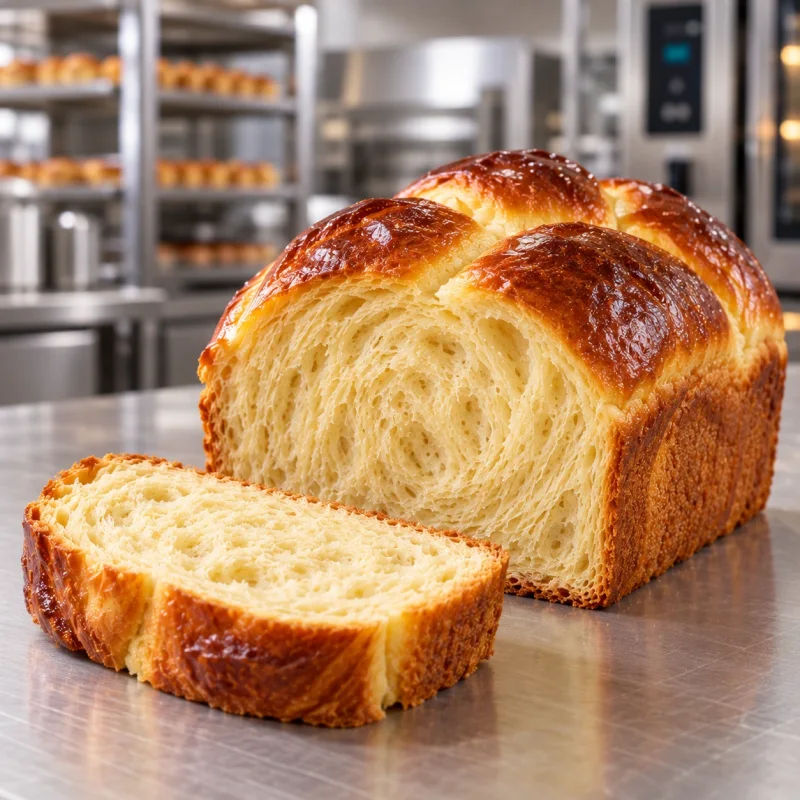
Aroma develops at several stages of baking
Stronger aroma in bread and desserts does not come from one universal additive. In bread, part of the profile develops during fermentation; during baking, especially in the crust, new toasted and nutty notes are formed. In desserts, fat, sugar, acid, water and product structure also affect how aroma is released and perceived. The most reliable approach is to change one variable at a time and compare aroma, flavor, color and texture.
If bread is structurally sound but tastes neutral, start with fermentation and browning. If a dessert smells intense but tastes flat, check the balance of sweet, sour and salty as well as the fat/water structure. This separates aroma formation from aroma release during eating.
Fermentation is the first major aroma lever in bread
Yeasts—and in sourdough, lactic acid bacteria—produce alcohols, acids, esters and other compounds or precursors during fermentation. Time, temperature, ferment type and flour therefore change the crumb's aromatic profile. Longer fermentation is not automatically better: an overripe dough can lose structure or drift toward unwanted acidity.
For more complexity, use a mature preferment or sourdough and extend fermentation only while the dough still holds gas well. Judge dough aroma, volume and strength rather than relying on the clock alone.
Browning in the oven builds crust aroma
Many volatile compounds form at the surface during baking. A major part of the characteristic roasted profile is associated with Maillard reactions and other thermal pathways. A very pale crust often has less roasted character, but darker is not automatically better: excessive heat can turn pleasant notes bitter or burnt.
Watch even color and smell during the final stage of baking. If the surface darkens before the center is stable, adjust oven profile, product size or position instead of simply baking longer.
In desserts, fat and structure change aroma release
Fat is not a simple “more aroma” switch. Lipids, proteins and carbohydrates can retain or release different volatile compounds at different rates. The same amount of vanilla, cocoa or citrus therefore behaves differently in an aerated foam, a buttercream and a water-rich glaze.
For creams, first check emulsion and serving temperature. A very cold fat-rich cream can feel closed and waxy; too warm and it may lose the structure needed for a balanced sensory impression.
Sweet, sour and salty determine flavor clarity
An aromatic product can still taste dull if it is too sweet, sharply acidic or lacks contrast. A small balance adjustment can make fruit, dairy, chocolate or grain notes clearer, but it cannot create aroma compounds that are not present. Adjust sugar, acid or salt one at a time, then taste again.
Protect delicate aromatics from unnecessary heat
Vanilla, citrus, coffee, cocoa, roasted nuts and spices do not respond to heat in the same way. Some volatile compounds are easily lost; others are retained more strongly in fat- or sugar-rich matrices. There is no universal rule that every aromatic ingredient belongs at the beginning or at the end.
Use the gentlest method that still gives even distribution. Evaluate the finished product at its real serving temperature, because temperature strongly affects volatile release.
The biggest improvement comes from treating aroma as a process: fermentation creates part of the compounds and precursors, baking builds new notes, and the food matrix controls how those compounds are released and perceived.
Diagnostics
Common problems and solutions
Problem
Cause: Fermentation is too fast/one-dimensional or crust development is weak.
Problem
Cause: Thermal load has moved beyond pleasant browning.
Problem
Cause: Serving temperature or food matrix is limiting aroma release.
Problem
Cause: Sweet, sour and salty balance is masking the main notes.
Problem
Cause: The ingredient was exposed to high heat for too long.
Technical terms
Terms worth understanding
- Volatile aroma compounds
- Molecules that can enter the gas phase and reach olfactory receptors; their release also depends on the food matrix and temperature.
- Maillard reactions
- A family of non-enzymatic reactions during heating that contribute to browning and many roasted aromas.
- Preferment
- A portion of flour and liquid fermented before final mixing to support structure and aromatic complexity.
- Food matrix
- The physical and chemical structure of food — including water, fat, proteins and carbohydrates — that affects aroma retention and release.
Frequently asked questions
Answers to common questions
What most improves the aroma of homemade bread?
Start with fermentation and browning. Well-managed fermentation shapes the crumb, while baking creates new roasted notes in the crust.
Does longer fermentation always mean better flavor?
No. It helps only while it develops the desired profile and the dough retains structure. Over-fermentation can weaken the dough or push acidity too far.
Does more butter automatically make a dessert more aromatic?
No. Fat changes the solubility and release of different volatile compounds, so serving temperature, emulsion and the water phase also matter.
Why does browned crust smell different from crumb?
The crust reaches higher temperatures and contains less water, so Maillard and other thermal reactions are more pronounced there; the crumb gets much of its character from fermentation.
Can acid or salt increase aroma?
They mainly change balance and perception. They cannot replace aroma compounds that were never developed because fermentation or browning was weak.
When should vanilla, citrus or other delicate aromatics be added?
There is no single rule. Avoid unnecessary prolonged high heat and, where the product allows it, place part of a delicate aroma in a lower-heat step, filling or glaze.