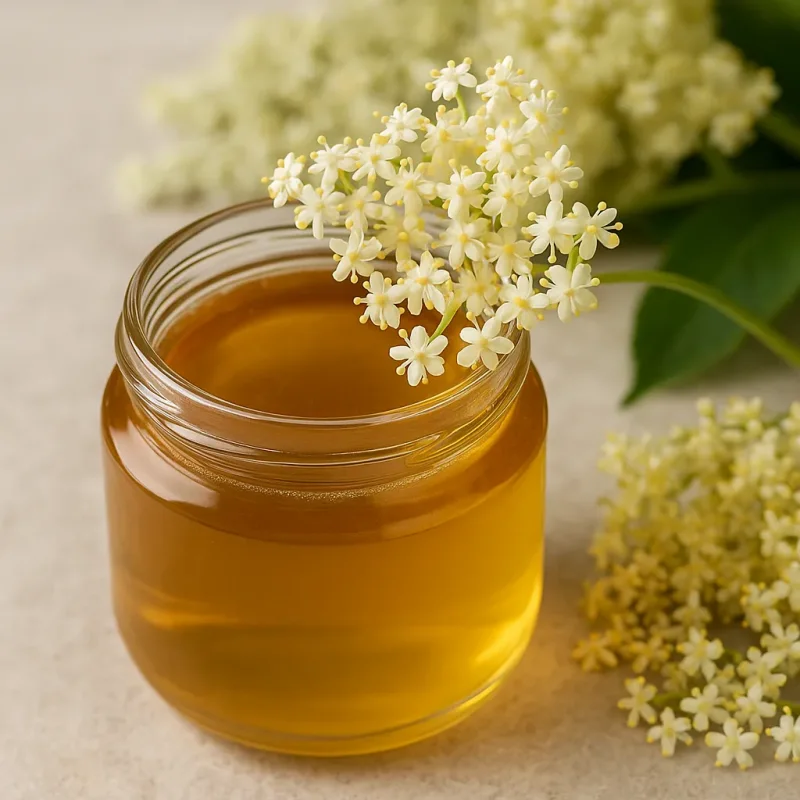
No bitterness means a clean floral profile
With elderflower syrup, the goal is not maximum extraction. The goal is a clear floral aroma without excessive green, astringent, or citrus-bitter notes.
Use correctly identified black elder (Sambucus nigra), trim the thicker green stems, and strain at the right time.
Choose fresh, fully open flower heads
Look for creamy-white, fully open heads with a strong pleasant fragrance. Avoid wilted, browning, or very green heads.
Pick from a clean location away from heavy traffic. Gently shake out insects. If the flowers are visibly dirty, rinse briefly in cold water and drain well; otherwise aggressive washing is unnecessary.
Trim the thicker green stems
Cut the main green stalks close to the branching flower head. You do not need to pick off every tiny flower.
A grassy, green, or long astringent finish after steeping often points to too much green plant tissue or excessive extraction.
Use a cold infusion for a dessert drizzle
Place the prepared flower heads in 500 ml cold water so they are loosely submerged without crushing. Cover and refrigerate.
Taste after 12 hours. If the aroma is still weak, continue up to about 24 hours. Longer is not automatically better.
Do not squeeze the flowers during steeping.
Lemon can brighten the syrup or make it bitter
For a clean elderflower profile, rely mainly on lemon juice. If you want peel, use only a very thin layer of yellow zest.
The thick white pith can add strong bitterness. Acid does not remove bitterness that is already present; it balances sweetness and freshness.
Turn the infusion into a dessert syrup
Strain through a fine sieve or clean cloth and let it drain without aggressive pressing.
For 500 ml strained infusion, add about 350–450 g white sugar and roughly 25–35 ml lemon juice. The lower end gives a lighter syrup; the upper end gives a thicker dessert drizzle.
Heat only until the sugar dissolves completely. Prolonged hard boiling needlessly drives off delicate floral volatiles.
Judge thickness after cooling
Warm syrup always looks thinner. Cool a spoonful on a cold plate.
A good drizzle flows in a thin, even stream and leaves a light glossy coating on a chilled dessert.
If too thin, heat briefly again. If too thick, add a small amount of water.
Why elderflower syrup turns bitter
If the infusion is bitter before sugar is added, check the amount of green stem, steeping time, and citrus pith.
If bitterness becomes dominant only after prolonged boiling, part of the floral aroma may have been driven off.
A grassy profile often points to less mature flowers, too much green tissue, or excessive steeping.
Storage
This method is for a fresh dessert syrup, not an unvalidated shelf-stable preserve. Keep it in a clean sealed bottle in the refrigerator.
For longer storage, freeze small portions rather than assuming months of room-temperature stability.
Three PEK checkpoints
Before steeping: correctly identified black elder, fresh open flower heads, and thicker green stems trimmed.
After 12–24 hours: clearly floral aroma without strong grassy or astringent notes.
After cooling: thick enough to drizzle but still flowing smoothly, with no long bitter finish.
Diagnostics
Common problems and solutions
The infusion is bitter before sugar.
Cause: Too many green stems, excessive steeping, or too much citrus pith.
Solution: Trim more green tissue, taste at 12 hours, and rely mainly on lemon juice.
The syrup tastes grassy.
Cause: Flowers were not fully open or too much green tissue remained.
Solution: Use more open fragrant heads and strain once the aroma is clearly floral.
The cooled drizzle is too thin.
Cause: Too little sugar or insufficient concentration.
Solution: Reheat briefly with a small amount of additional sugar and test cold again.
Technical terms
Terms worth understanding
- flower head
- A cluster of small elderflowers on a branching stalk.
- cold infusion
- Extracting aroma in cold liquid without boiling the flowers.
- citrus pith
- The white layer beneath colored citrus peel that can contribute strong bitterness.
Frequently asked questions
Answers to common questions
How do I keep elderflower syrup from turning bitter?
Use fresh open black elder flowers, trim thicker green stems, taste after 12 hours, and usually strain by around 24 hours. Use mainly lemon juice and avoid thick white citrus pith.
Should I wash elderflowers?
If they come from a clean site and are not visibly dirty, gently shake them. If visibly soiled, rinse briefly in cold water and drain well; the aroma may be slightly softer.
How long should elderflowers steep?
For a clean dessert syrup, about 12–24 hours in the refrigerator is a useful range. Taste at 12 hours and strain once the floral aroma is strong enough.
Why can lemon make elderflower syrup bitter?
The white pith beneath the yellow peel can contribute strong bitterness. For a delicate syrup, use lemon juice and, if desired, only a very thin layer of yellow zest.
How should I store elderflower syrup for desserts?
This version is intended for fresh use. Keep it in a clean sealed bottle in the refrigerator. For longer storage, freeze small portions; do not assume months of room-temperature stability without a validated preserving process.