A flat top is a deliberate style, not the only correct muffin shape
A classic muffin can be domed and still be perfectly baked. If you want a flat or gently rounded top for frosting, glazing or a uniform presentation, the goal is to control the shape on purpose. There is no single oven temperature that flattens every muffin formula.
Top shape is produced by several variables working together: oven temperature, leavening, batter consistency, the amount of batter in each well, and how quickly the crumb structure sets.
Why muffins form a dome
Muffin batter heats from the outside toward the center. Gas from chemical leaveners and expanding steam increases volume while starches and proteins gradually set the crumb. If the outside firms up while the center is still expanding strongly, the remaining lift is pushed upward and a dome forms.
That is why very high starting temperatures are commonly used when bakers deliberately want tall bakery-style muffin tops. If your target is flatter, that initial heat blast is usually the opposite of what you want to test first.
Start with equal portions
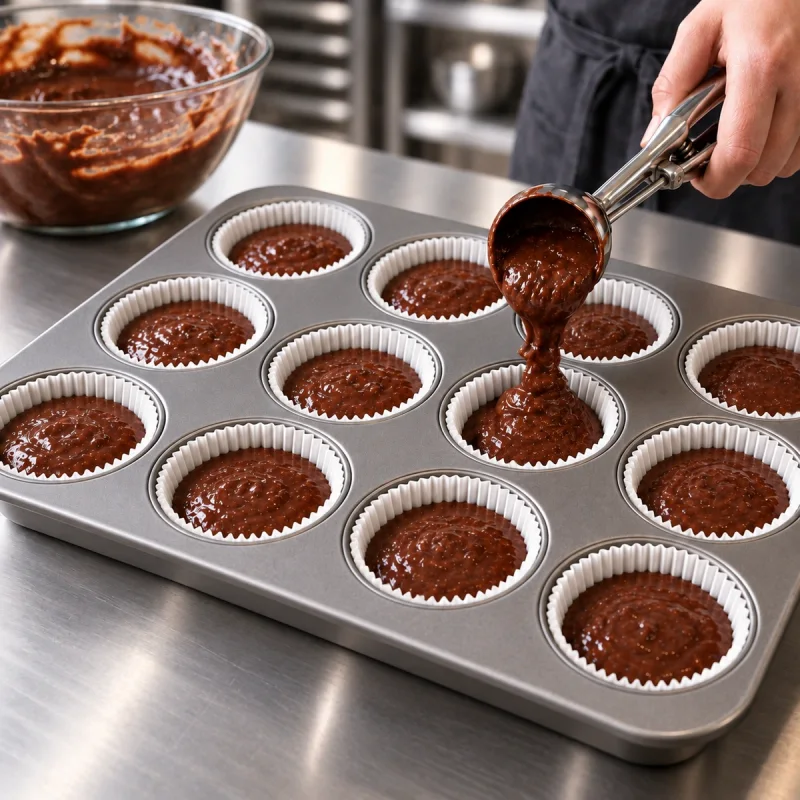
Before changing the formula, make every well comparable. Portion the same amount of batter into each cup. A scale or consistent scoop is more reliable than eyeballing.
About three-quarters full is a useful starting point for many recipes, but it is not a universal rule. What matters most is repeatable portion size and whether the recipe was designed to be filled close to the rim.
Use a steadier baking profile
If a tested recipe consistently produces a dome that is too tall for your purpose, first try a steadier bake without a very high starting temperature. A modest temperature reduction may help, with a slightly longer bake if needed.
Do not change the liquid, leavening and fill level at the same time. If you change several variables together, you will not know which one affected the shape.
Real oven temperature matters too. If the same batter behaves differently from batch to batch, an oven thermometer may be more useful than another recipe tweak.
Leavening and cocoa both matter
More baking powder does not automatically make a better muffin. Excess leavening can increase rapid rise, cracking or later collapse. If baking soda is used, the amount of acid in the formula also matters.
Cocoa changes batter behavior because it binds water and changes consistency. Swapping cocoa types or adding more cocoa can therefore change both spread and rise.
For the broader relationship between water and crumb structure, see the guide to moisture and a stable crumb.
Mix only until combined
Once the wet and dry ingredients meet, stop mixing when the dry flour is incorporated. Prolonged mixing can develop more gluten and make the crumb tougher.
A few small lumps are usually less harmful than an extra minute of mixing. It is more important to distribute cocoa, salt and chemical leaveners evenly through the dry ingredients before adding the liquids.
Test one variable at a time
Record the oven setting, batter weight per well and bake time. On the next batch, change only one factor — for example the baking profile. If the top becomes flatter while the crumb stays tender and fully baked, you have found a useful adjustment for that recipe and oven.
If the result barely changes, then investigate the leavener amount or batter consistency.
The short version: equal portions, no aggressive high-heat start, moderate leavening and minimal mixing. A small dome is not a failure. The real skill is knowing why the shape happened and being able to repeat the result you want.
Frequently asked questions
Answers to common questions
Why do chocolate muffins dome instead of staying flat?
The center can keep expanding after the edges and surface begin to set. High initial heat, generous leavening, stiff batter or very full wells can all increase that effect.
Is a flat top a sign of a better muffin?
No. Traditional muffins are often domed. A flatter top is mainly useful when you want frosting, glaze or a very uniform presentation.
Will a lower temperature always make muffins flatter?
No. A steadier, lower profile can reduce rapid center rise, but the result still depends on the formula, leavening, batter consistency, pan size and actual oven temperature.
How full should the muffin wells be?
Use the same amount of batter in every well. Around three-quarters full is a common starting point, but the recipe design matters more than a fixed percentage.
Does cocoa affect the shape of chocolate muffins?
Yes. Cocoa binds water and changes batter consistency, so changing its type or amount can alter spread and oven rise.
Does oil make flatter muffins than butter?
Not necessarily. Oil often helps keep the crumb tender, but top shape is driven more by the whole formula, leavening, temperature and portion size.
How do I diagnose an overly tall dome?
Weigh the portions, verify oven temperature, then change only one factor between batches, such as the baking profile or leavener amount.