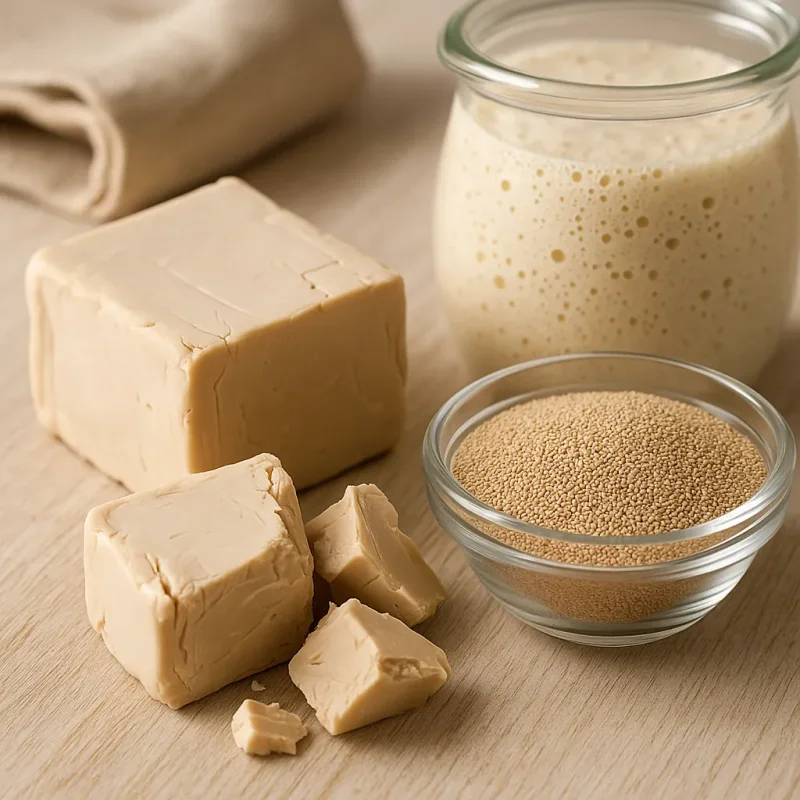
How to store yeast so it stays active
There is no single storage life that applies to every type of yeast. Fresh yeast, active dry yeast and instant yeast are different products. Keep opened dry yeast tightly sealed and protected from heat and moisture; refrigerate fresh yeast and use it promptly. Treat a sourdough starter as a separate living culture. Above all, follow the storage instructions for the specific product.
Problems often begin when advice for one type is applied to another. An opened packet of instant yeast beside a warm stove is not the same as a refrigerated block of fresh yeast. And sourdough starter is not simply another packaged yeast: its activity depends on feeding, temperature and maintenance.
Identify the yeast before deciding where to keep it
| Type | After opening | Main concern |
|---|---|---|
| Instant yeast | Dry, tightly sealed container; refrigerator or freezer if the product instructions allow | Moisture, heat, repeated opening |
| Active dry yeast | Airtight container; refrigeration or freezing as directed by the manufacturer | Moisture and declining activity |
| Fresh (compressed) yeast | Refrigerator, with suitable wrapping or container | Short shelf life, drying and spoilage |
| Sourdough starter | Feeding schedule matched to how often you bake | Weakening culture and unsuitable feeding intervals |
For unopened commercial yeast, the package instructions take priority over generic online advice. Manufacturers set storage conditions for their own formulations and packaging.
Keep dry and instant yeast away from moisture
Once you open a larger pack, move the yeast into a clean, completely dry, airtight container. Use a dry spoon, and avoid opening it next to a dishwasher vent, boiling pan or other source of steam.
Many manufacturers recommend refrigerating opened yeast; some products can also be frozen. Do not assume a universal “use within X months” rule. Recommendations differ between brands and package sizes. Label the container with the opening date.
If you keep yeast in the freezer, measure out what you need quickly and close the container straight away. This reduces moisture condensing on the chilled granules.
Fresh yeast needs cold storage and prompt use
Fresh compressed yeast contains considerably more water than dried yeast, making it much less stable. Keep it refrigerated, respect the date on the packaging and avoid breaks in refrigeration. Discard it if you see mould, a slimy surface, an unusual smell or marked discoloration. Severe drying is another sign it may no longer perform reliably.
For occasional home baking, buying a smaller fresh block is more dependable than routinely freezing leftovers. Freezing advice for dry yeast should not be assumed to apply to fresh yeast.
Sourdough starter follows different rules
A starter is a fermented mixture of flour and water. Frequent bakers may maintain it at room temperature with regular feeding. If you bake less often, refrigeration between feedings is common, followed by refreshing it before making dough. The schedule depends on the flour, hydration, temperature and strength of the culture.
Watch its rise, aroma and time to peak activity, rather than relying only on a fixed number of hours. For the wider picture, see our guide to bread dough fermentation.
How to check whether old dry yeast still works
If a packet has been open for a long time or stored poorly, the date alone is not enough. Active dry yeast can be checked separately in lukewarm liquid using the manufacturer's recommended method. If the expected signs of activity do not appear within the specified time, a new packet is the safer choice for an important bake.
Instant yeast normally goes straight into the dough without proofing. A separate activity check can still be useful if you suspect it has weakened. Even a positive test cannot guarantee a successful rise: dough temperature, salt, sugar, hydration and flour strength also matter.
Storage mistakes to avoid
- Do not leave an opened packet near heat or steam.
- Never use a wet measuring spoon in a container of dry yeast.
- Do not apply fresh-yeast shelf-life guidance to dry yeast, or vice versa.
- Do not reheat baked bread or pastries in an attempt to “reactivate” yeast.
- Do not confuse maintaining a sourdough starter with storing commercial baker's yeast.
Diagnostics
Common problems and solutions
Dry yeast has clumped together.
Cause: Moisture has probably entered the container.
Solution: Use a new pack for an important bake; keep future supplies dry and tightly sealed.
Dough will not rise and the yeast was opened long ago.
Cause: Yeast may have lost activity, or another dough condition may be responsible.
Solution: Test yeast separately and check dough temperature, salt and the formula.
Frequently asked questions
Answers to common questions
How long will fresh yeast keep in the refrigerator?
There is no single reliable period for every product. Follow the date and storage directions on its pack. Discard any yeast showing mould, slime or an unusual smell.
Can I freeze dry yeast?
Some manufacturers recommend freezing opened dry yeast, while others specify different storage. Check your product label and prevent condensation on the granules.
Why is my yeast not foaming during a test?
Weak yeast or unsuitable test conditions may be responsible. Follow the correct method and liquid temperature for that product; instant yeast usually does not need proofing.
Which is easiest to keep: fresh, active dry or instant yeast?
Dry and instant yeast are generally more practical for a home pantry. Fresh yeast needs refrigeration and quicker use; choose according to your recipe and routine.
How can I keep a sourdough starter active?
Feed consistently, use a suitable temperature and clean jar, and monitor rise, smell and time to peak activity. Adapt the schedule to how often you bake.
How can I tell if older dry yeast still works?
Check the storage conditions, opening date and manufacturer’s directions. If an activity test is appropriate, follow it. For an important bake, replacing doubtful yeast is safer.