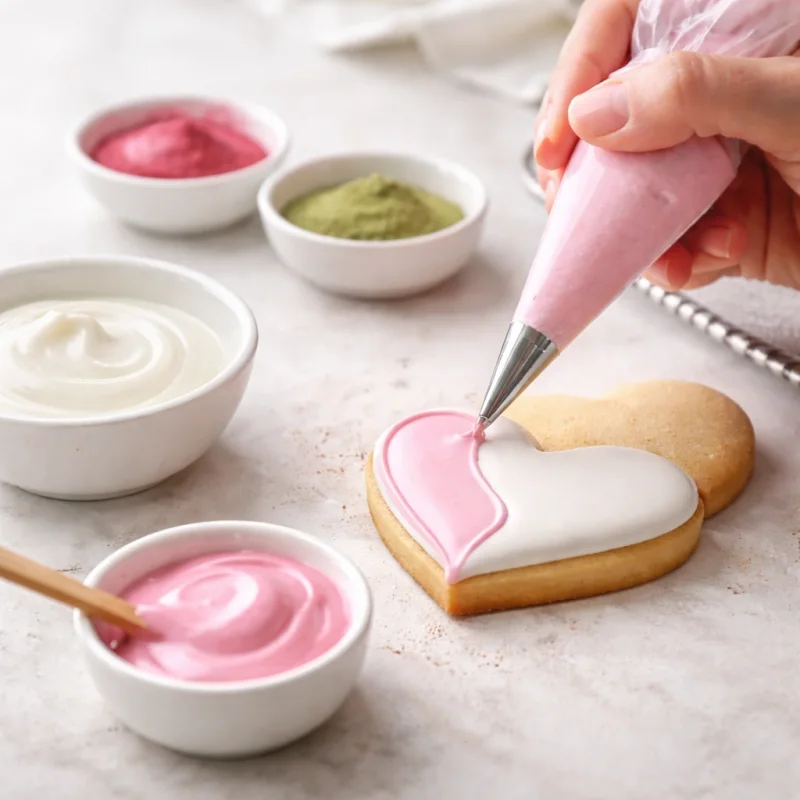
Natural food coloring for royal icing: color without artificial dyes
Royal icing can be colored naturally, but the final working consistency should be set after the color goes in. Very fine powders and concentrated natural food colors usually add less extra liquid than juices, so they are easier to control for outlining and flooding.
Royal icing, not two separate technical icings
Royal icing and royal frosting overlap in everyday use. This guide does not repeat the base recipe, general consistency work or bubble troubleshooting. It focuses only on coloring an already stable white royal icing.
Powder, concentrate or juice
Natural color is not just pigment. It may also bring water, dry particles and flavor. A very fine powder adds little liquid, but high doses can affect taste and texture. Juice changes the liquid balance much faster.
Beet powder is useful for pink and red-leaning shades, turmeric for yellow, matcha for green and cocoa for brown. With all of them, stronger color usually means more noticeable ingredient flavor.
A reliable order of work
- Prepare a stable white base.
- Remove a small test portion.
- Add a small amount of pigment and mix thoroughly.
- Check color, flavor and flow.
- Only then set the final piping or flooding consistency.
Treat beet juice, berry juice and other liquid colors as added liquid. Add them drop by drop. If the icing starts flowing noticeably faster, you have changed more than the shade.
Specks, clogged piping openings and strong flavors
Use the finest powder available and sift it if necessary. If specks remain, work the pigment smooth in a small portion of icing before mixing that portion back into the batch. Coarse or fibrous powders are a poor choice for tiny piping openings.
Deep red and black are harder than pastel shades. Pantry pigments may require enough material to change flavor, viscosity or smoothness. In that case, a concentrated natural pastry color or a slightly lighter shade is the better technical choice.
Judge the color after drying
Wet icing and dry icing do not look identical, and some natural colors continue developing as they rest or dry. Pipe a small sample onto parchment or a test cookie and let it dry completely before committing the full batch.
Common coloring problems
| Problem | Likely cause | Fix |
|---|---|---|
| icing flows too fast | too much liquid color | blend in a little thicker uncolored base |
| visible specks | pigment is too coarse | use a finer, sifted powder |
| earthy or bitter flavor | too much pantry pigment | accept a lighter shade or use a concentrate |
| dry shade differs from wet icing | change during drying | decide from a dried test |
Add color gradually. Finish the consistency after coloring. Confirm the final shade on a dried test.
Diagnostics
Common problems and solutions
The icing flows much faster after coloring.
Cause: Too much liquid color or juice added extra liquid.
Solution: Blend in a little thicker uncolored base and use a more concentrated color next time.
Dark specks remain or a small piping opening clogs.
Cause: The powder is too coarse or was not dispersed evenly.
Solution: Use a finer, sifted pigment and first work it smooth in a small portion of icing.
The color is strong but the flavor is earthy or bitter.
Cause: Too much pantry pigment was needed for the target shade.
Solution: Accept a lighter shade or use a more concentrated natural pastry color.
The dried color looks different from the wet icing.
Cause: Wet and dry surfaces look different and some pigments continue developing as they dry.
Solution: Dry a small test completely before coloring the full batch.
Frequently asked questions
Answers to common questions
Which natural colors work in royal icing?
Very fine beet, turmeric, matcha, cocoa and fruit powders can work, as can concentrated natural food colors made for baking. Always follow the label and dosage guidance for the specific product.
Is powdered or liquid natural food coloring better?
If you want the smallest change in consistency, a very fine powder or concentrate is usually easier to control. Liquid color and juice add extra liquid.
Can I use beet juice for pink royal icing?
Yes, but add it drop by drop and count it as additional liquid. For stronger color, fine beet powder or a concentrate is often more practical.
Why does natural food coloring change as royal icing dries?
Wet and dry surfaces look different, and some pigments continue developing during resting and drying. Judge the final shade on a fully dried test.
How can I get deep red or black without artificial dyes?
These are difficult shades. High amounts of pantry pigment can change flavor or texture, so a concentrated natural pastry color or a less saturated shade is often the better choice.
Do natural food colors change flavor?
They can. Turmeric, matcha, beet and cocoa have their own flavors, which become more noticeable at higher doses.