Cake size converter: scale a recipe between baking tins
Convert a cake recipe between round, square and rectangular tins using actual volume, height and the portion size you want to serve.
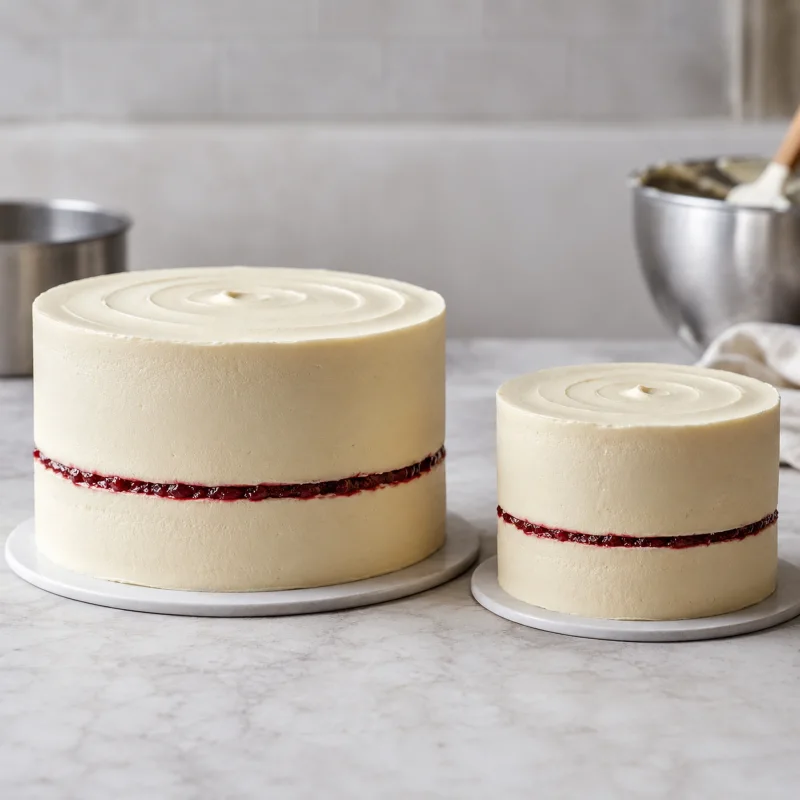
Enter the original and new cake dimensions. The converter uses tin volume, so it accounts for shape and height rather than diameter alone.
Scale cake size and recipe quantities
Set the original and target tin first. Add ingredients if you also want the exact scaled quantities.
How cake-size conversion works
The key is to compare the space the batter occupies in the original and target tins. If height stays the same, surface area is enough; once height or shape changes, volume must be compared. That is why moving from an 18 cm to a 24 cm round tin is not simply 33% more batter: at equal height the geometric factor is about 1.78.
Enter the usable inside dimensions of both tins and the realistic batter or finished-cake height. The tool calculates the recipe factor from those dimensions. If you add ingredients, it applies the same factor to their quantities and flags ingredients where blindly multiplying the number is not always the best technical decision.
How to read the recipe factor and portions
The recipe factor tells you how many times the base recipe is needed for the target volume. Portion estimates also depend on cake height, density and how large you cut each serving, so treat the portion number as a planning estimate rather than a fixed promise.
Baking time and temperature do not scale linearly
A factor of 1.78 does not mean multiplying baking time by 1.78. A larger or taller mass changes the path heat must travel to the centre while the edges remain directly exposed to oven heat. Start from the base recipe temperature, then judge the bake by centre stability, edge colour and the actual batter depth in the tin.
When geometry is not enough
Strongly tapered tins, ring moulds and very irregular shapes are not described well enough by simple dimensions. In those cases, compare the real usable volume of the tins. Decoration, coating and some filling quantities can also depend more on exposed surface area than on total cake volume.