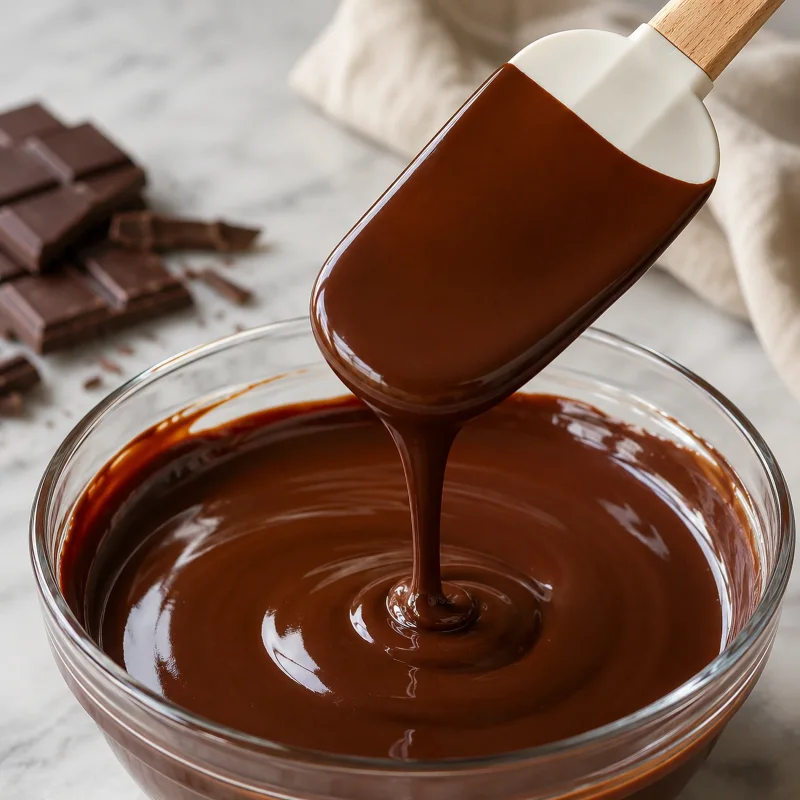
Smooth glaze is made before the chocolate ever touches the cake
Lumps, an oily edge and pale patches need three different fixes
Chocolate can look smooth in the bowl yet break into an uneven stream when poured, develop an oily sheen around the edge, or turn patchy after chilling. Treat these as different symptoms. Hard pieces need to be fully melted, an oily grainy ganache needs to be re-emulsified, and pale patches call for a check of surface moisture and cooling conditions.
First identify the type of coating. Ganache contains chocolate plus a water-based liquid and depends on a stable fat-and-water emulsion. Pure couverture contains little or no water and its final shine depends on cocoa-butter crystallization. Adding cream is therefore not a universal fix for every chocolate coating.
Lumps usually begin with uneven melting
Large pieces can hide below a surface that looks smooth
Chop chocolate finely and as evenly as possible. Uneven pieces heat at different rates, so small hard pieces may show up only on the spatula or as breaks in the stream.
For a classic ganache, add the hot liquid to the chocolate and begin mixing from the center. A small dark, elastic, glossy core should form first; gradually draw the rest of the mixture into it. When making a smooth chocolate ganache, keep the immersion blender fully submerged so it does not pull air into the mixture.
If hard pieces remain, warm the ganache gently in short steps and mix thoroughly after each one. Stop as soon as the pieces disappear. Do not keep heating simply to make the glaze thinner.
An oily edge points to the emulsion
A thick ridge, a thin stream and an oil film are not the same fault
A glaze that is too cold falls from the spatula as a heavy ribbon and leaves a ridge on the surface. A glaze that is too warm runs in a very thin stream. A genuinely broken emulsion shows a visible film of fat on the surface or around the bowl.
Check temperature and flow first. Warm an overly cold glaze gently; allow an overly warm glaze to cool slightly. Then re-emulsify with the immersion blender completely under the surface. If the oily edge disappears and the glaze becomes evenly glossy, no extra ingredient is needed.
If fat still separates after the temperature has been corrected, the original ratio of chocolate, liquid or added fat may be wrong. Without a known formula, do not make random additions.
Pale and dull patches often start on the cake surface
A cold base should be firm but completely dry
Before glazing, the cake surface should be smooth, cool and free of condensation. Water droplets, frost or wet spots interfere with adhesion and can show up later as pale or dull patches.
If condensation appears, wait until the surface dries without allowing the coating underneath to soften. Do not wipe soft buttercream or ganache with paper. Seal loose crumbs with a thin base coat rather than expecting liquid glaze to hide them.
Flow tells you when the glaze is ready to pour
The right ribbon is continuous and settles without leaving a heavy ridge
Working temperature depends on chocolate type, chocolate-to-cream ratio and other ingredients. For a pourable dark ganache, 30–34 °C (86–93 °F) is a useful starting reference, not a universal target.
Lift the spatula a few centimeters above the bowl. The glaze should fall in a broad, continuous ribbon. A thick ridge that remains visible indicates a glaze that is too cold or too thick. A very thin, watery stream suggests it is too warm or contains too much liquid.
Before pouring, check three things: the cake surface is dry and firm, there is no oily edge on the glaze, and the stream is continuous. Pour in one calm pass and minimize repeated smoothing.
Diagnostics
Common problems and solutions
Hard lumps
Cause: Incomplete melting.
Oily edge
Cause: Broken emulsion.
Dull or pale patches after chilling
Cause: Condensation or crystallization problems.
Frequently asked questions
Answers to common questions
How can I tell whether the glaze is too cold or too warm?
A glaze that is too cold falls in a thick ribbon and leaves a ridge. A glaze that is too warm runs in a very thin stream and spreads almost uncontrollably.
Does every oily ganache need more cream?
No. Correct the temperature and re-emulsify first. Add liquid only when a ratio problem has been confirmed.
What if the glaze stays thin even after cooling?
Check the original ratio of chocolate, cream and any added fat. If the formula is uncertain, making a fresh glaze is often the safer correction.
Why does chocolate glaze lose its shine after chilling?
Common causes include condensation, uneven cooling and poor crystallization in pure chocolate. Identify the glaze type before correcting it.