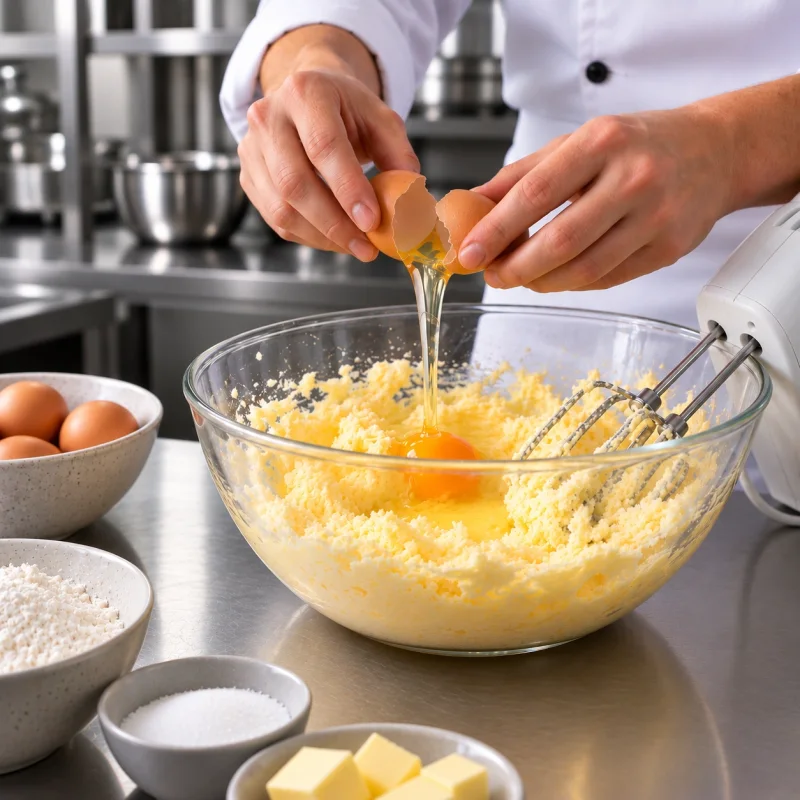
How to add eggs to cake batter without curdling it
In a classic creaming-method butter cake, adding the eggs is not just another mixing step. Creamed butter and sugar already contain tiny air pockets; the eggs bring in water, protein, fat, and natural emulsifiers. The goal is to incorporate that new liquid gradually while keeping both the emulsion and as much of the trapped air as possible.
This advice is not universal for every cake. Oil cakes, melted-butter batters, whipped-egg sponges, and choux pastry use different mixing logic.
The short answer
Use butter that is soft but not melted, and add the eggs gradually. One at a time works well; with several eggs, lightly beating them first and adding the mixture in smaller portions gives even more control. Mix each addition only until the batter looks smooth and cohesive again before adding more.
What is happening in the bowl
Creamed butter and sugar form an aerated fat-rich base. Eggs add a substantial water phase. Emulsifying compounds in the yolk, including lecithin and other phospholipids, help keep fat and water finely dispersed. When the system is stable, the batter looks velvety and holds the air cells created during creaming.
The emulsion can break if liquid is added faster than the fat phase can accommodate it. Very cold eggs can also chill softened butter into small firm particles. The result is the familiar curdled look: grainy fat particles with wetter areas between them.
A repeatable way to add the eggs
- Cream the butter and sugar as directed. The butter should be pliable, not greasy or partially melted.
- If the recipe calls for room-temperature ingredients, take the eggs out in time. Whole eggs can be warmed quickly by placing them in lukewarm water for a few minutes.
- Add one egg, or a small portion of lightly beaten egg.
- Mix on low to medium speed until the batter is cohesive again.
- Scrape the bottom and sides of the bowl so hidden butter is fully incorporated.
- Only then add the next portion.
A stable base also supports a stable layer-cake structure, because fat, water, and air are distributed more evenly from the start.
Signs the batter is starting to break
A batter can look slightly rippled for a few seconds after an egg goes in. That is normal if it quickly comes back together. Warning signs are a texture that stays grainy, curdled, or wet, visible beads of firm butter, or liquid separating around the mixture.
How to rescue a curdled cake batter
Stop adding egg first. Scrape the bowl and mix briefly. If the mixture is clearly too cold, warm the outside of the bowl very gently while mixing. A warm towel or brief, controlled external warmth is enough; the goal is to soften the butter, not melt it.
If the recipe contains flour and the batter starts to break during the later egg additions, a small amount of the flour already measured for the recipe can help stabilize the emulsion. Do not add extra flour beyond the formula just to make the batter look smooth.
Catching the problem early is better than trying to beat a badly broken batter back together after all the flour has gone in. Prolonged mixing at that stage can develop more gluten than you want in a tender cake.
Do eggs always need to be at room temperature?
No. Room-temperature eggs are especially useful when they are being incorporated into softened creamed butter. In an oil-based cake or a batter made with melted butter, cold eggs may not create the same problem. Sponge cakes and choux pastry have different structural priorities again.
A better principle is to match ingredient temperature to the mixing method, rather than treating room temperature as a universal baking commandment.
The professional checkpoint
Properly emulsified batter is smooth, cohesive, and slightly glossy, with no watery separation and no obvious firm butter granules. Let that visual signal determine when the next portion of egg goes in. That one habit makes the process far more repeatable.
Frequently asked questions
Answers to common questions
Why does cake batter curdle when I add eggs?
Usually because the eggs are much colder than the softened butter or because too much liquid is added at once. The butter can firm into small pieces and the water and fat phases separate.
Do eggs always need to be at room temperature for baking?
No. It matters most when eggs are being added to softened creamed butter and sugar. Oil cakes, melted-butter cakes, and other methods may work perfectly well with a different temperature strategy.
Should I add whole eggs one at a time or beat them first?
Either works. With several eggs, lightly beating them first lets you add smaller portions and gives finer control over the emulsion.
How do I fix cake batter that is starting to curdle?
Stop adding egg, scrape the bowl, and mix briefly. If the batter is too cold, warm the outside of the bowl very gently. If the recipe contains flour, a small amount from the measured recipe flour can help stabilize the emulsion.
Can I just beat curdled batter for longer?
A little extra mixing before the flour goes in may help, but prolonged aggressive mixing is not a universal fix. Once flour is added, overmixing can develop gluten and toughen the cake.
How do I know when to add the next portion of egg?
The batter should look smooth and cohesive again, without watery separation or obvious firm butter granules.