When a cream separates, identify the system before trying to fix it
Ganache, buttercream and whipped cream are not the same physical structure
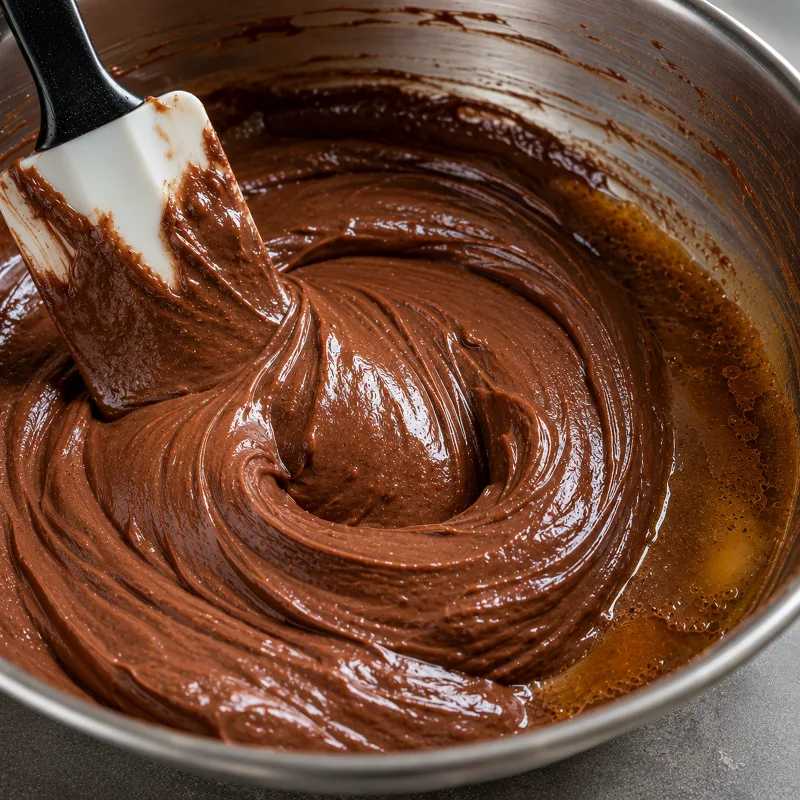
An oily edge on ganache, curdled buttercream and grainy whipped cream can look like versions of the same failure. They are not. Ganache is primarily an emulsion of an aqueous phase and a fat-rich chocolate phase. Buttercream depends on keeping the butter phase plastic enough to incorporate the water- or meringue-based phase. Whipped cream is different again: during whipping, a controlled amount of fat-globule destabilisation is required to build a network around air bubbles.
That leads to a more reliable rule than “warm it” or “add more liquid”: identify the system, identify what is separating, then change one variable at a time.
Ganache: aim for a homogeneous emulsion, not one magic temperature
The useful temperature depends on the formula and stage
In ganache, water from cream or another liquid has to coexist with cocoa butter, milk fat, cocoa solids, sugar and any added ingredients. A successful ganache behaves as one continuous, smooth mass with no free oily layer.
There is no universal 32–38°C working window for every ganache. Professional methods use temperature according to the chocolate, liquid level and stage of production. For example, some formulas require the mixture to stay above about 35°C while the emulsion is being built, while butter may be added around 35–40°C. Those numbers describe specific operations, not a universal target for every recipe.
A safer method is progressive emulsification: add the liquid in stages, work from the centre until a smooth elastic core appears, then incorporate the rest. If you use an immersion blender, keep the head submerged so that you refine the emulsion without pulling in unnecessary air.
Oily or grainy ganache: diagnose before adding anything
Heat, cooling and formula imbalance can produce similar symptoms
Visible oil droplets, a greasy sheen or a grainy mass strongly suggest that the ganache is no longer behaving as a stable emulsion. But appearance alone does not tell you why. The mixture may have been overheated, it may have cooled until fat crystallisation interfered with mixing, or the formula may simply contain too little aqueous phase for the amount and type of chocolate.
First check whether the chocolate is fully melted and the mass is fluid enough to re-emulsify. If it is too cold and stiff, warm it gently. Then rebuild the emulsion from the centre outward or with a submerged immersion blender.
If the formula is genuinely short of aqueous phase, a small amount of compatible liquid can help. Do not rely on a fixed rule such as “one or two tablespoons per 300 g”. Add only a little at a time because extra liquid also changes the final firmness and intended use of the ganache.
Also keep seized chocolate separate from split ganache. In seized chocolate, a small accidental amount of water causes dry chocolate particles and sugar to clump into a thick paste. In ganache, water is already a deliberate part of the formula.
Buttercream often fails because the fat and base are at the wrong relative temperature
Curdled and soupy are often opposite problems
In Swiss, Italian and related buttercreams, temperature is one of the first things to check. If the mixture is too cold, butter can remain in firm particles and the frosting looks curdled or cottage-cheese-like. If it is too warm, the fat softens too far and the buttercream becomes loose, shiny and unable to hold shape.
For a too-cold buttercream, gently warming part of the bowl while mixing is usually more useful than adding sugar or liquid. For a too-warm buttercream, brief chilling followed by re-whipping is more appropriate. The goal is not one exact number for every buttercream; it is a workable balance between the fat phase and the water- or meringue-based phase.
Whipped cream is the exception: some destabilisation is desirable
Partial coalescence helps create the foam
Liquid dairy cream begins as an oil-in-water emulsion. During whipping, air is incorporated and partially crystalline fat globules begin to link around the air cells. This partial coalescence is a key part of building whipped-cream structure.
Cold conditions matter because they influence the state of the milk fat and the cream’s whipping behaviour. But whipping too far pushes the system past the useful point: larger fat aggregates form, the texture becomes grainy, liquid can separate and the process moves toward butter formation.
For cake fillings and piping, use the dedicated guide to stabilising whipped cream, because the control logic is different from rescuing ganache.
Liquid weeping after chilling is not always a broken emulsion
Syneresis, foam drainage and phase separation are different faults
When a filling releases liquid in the refrigerator, it is tempting to conclude that “the water phase was not bound”. Sometimes that is true, but not always.
A starch-thickened or gelled cream can release water through syneresis, where the network contracts and expels liquid. Whipped cream can drain because its foam is unstable. Ganache more typically shows free fat when its emulsion fails. Those mechanisms do not respond to the same fix.
Look at what is actually separating. A clear or milky liquid suggests a different problem from a yellowish oil film. A curdled buttercream needs a different response from a smooth gelled filling that slowly weeps.
The PEK diagnostic order
System → symptom → one targeted correction
When texture fails, use this sequence. First decide whether you are working with an emulsion, a foam, or a starch/gel network. Next identify the symptom: free oil, free water, graininess, or lost volume. Only then change temperature, mixing method or formulation.
For ganache, rebuild a homogeneous emulsion. For buttercream, correct the temperature balance. For whipped cream, assess the degree of whipping and foam stability. For cooked or gelled creams, evaluate the thickening system rather than automatically treating the problem as an emulsion failure.
The final control is not shine alone. A cream should be appropriate to its system: homogeneous, free of unintended oil or water, at the right viscosity, and stable after the chilling or holding step the recipe actually requires.
Frequently asked questions
Answers to common questions
Why does ganache split even when I used the correct chocolate-to-cream ratio?
Ratio is only one factor. The emulsion can fail because of temperature state, incomplete melting, how the liquid was incorporated or mixing. Make sure the mixture is fluid enough to emulsify, then rebuild it from the centre outward.
Can broken buttercream be rescued?
Often yes. A curdled, cottage-cheese-like buttercream is frequently too cold, so gently warm part of the bowl while mixing. If it is soft and soupy, it may be too warm; brief chilling followed by re-whipping is more appropriate.
Does liquid weeping after chilling always mean a broken emulsion?
No. Starch- or gel-set creams can release water through syneresis, and whipped cream can weep because the foam is unstable. First identify whether water, fat or volume is being lost.
How do I know ganache is properly emulsified?
It should be homogeneous, with no free oil or watery pockets. It should move as one texture and set as the formula predicts after cooling. Shine alone is not enough to diagnose stability.