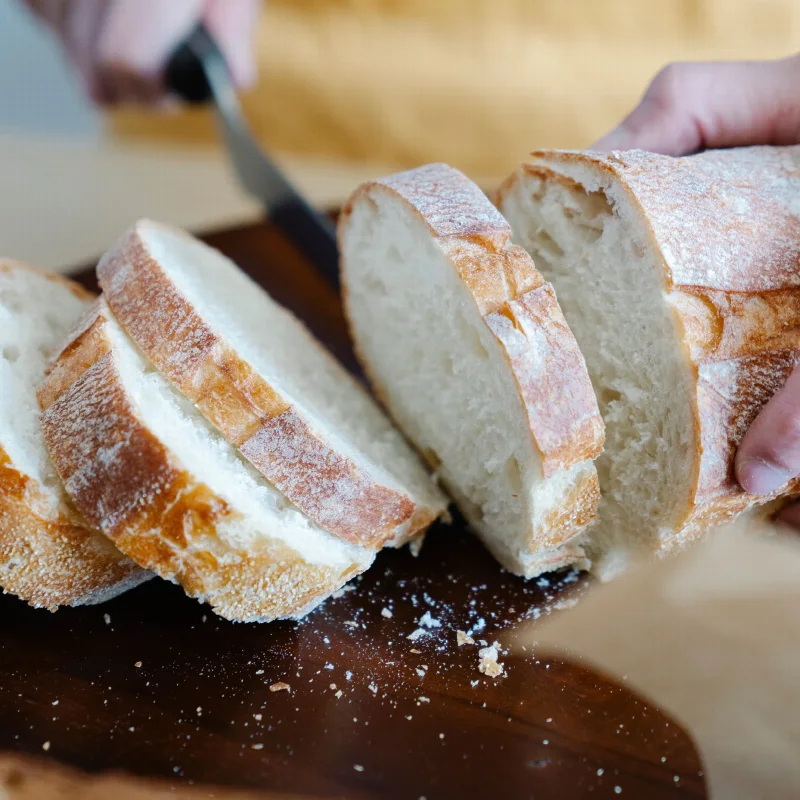
A dark crust is only useful if the crumb keeps up
If the crust becomes deeply brown well before the crumb has set, the surface is receiving too much heat relative to the rate at which the center is baking. The pattern often appears first on score edges, the top of the loaf, or the bottom. The key question is not only how dark the crust is, but when and where that color develops.
Rack position and heating mode matter as much as the number on the oven display. If the problem repeats, review convection, conventional heat and rack position. A loaf that always darkens in the same zone is pointing to local heat distribution, not simply excessive total baking time.
Steam belongs early; crispness needs a dry finish
For crusty breads, steam early in the bake delays surface setting, supports oven spring, and can improve shine and browning. After the main expansion, excess moisture needs to leave so the crust can dry and become crisp. See the guide to steam in bread baking for the process in more detail.
Too much moisture late in the bake can leave the crust soft after cooling. Too little early steam can set the surface prematurely. The goal is not maximum steam; it is steam at the right stage.
If the crust is too dark, reduce heat load rather than chasing time
When the top darkens too quickly, move the loaf lower or reduce the temperature after oven spring. If the bottom burns, the cause may be a very hot dark Dutch oven, baking steel, stone, or proximity to the lower element. A heat shield or different rack position often solves the problem better than cutting the entire bake short.
Doughs containing sugar, milk, eggs, honey, or fat brown faster than lean flour-water-salt-yeast doughs. A brioche should not be expected to tolerate the same heat profile as a lean hearth loaf.
A pale crust needs a different diagnosis
If the crumb is baked but the crust is pale, check actual oven temperature, the length of the dry finishing phase, and whether early steam was excessive or insufficient. If the oven seems inconsistent, check the oven’s actual temperature across several heating cycles rather than trusting one instant reading.
Paleness can also come from dough composition or simply too little dry finishing time. Do not add aggressive top heat while the center still needs time to set.
Crust color is not proof that the center is done
A large or high-hydration loaf can look dark before its crumb is fully stable. Conversely, some breads can be fully baked with a relatively light crust. Use the recipe, crumb structure after cooling, and—where appropriate—internal temperature as additional checks.
A useful rule is simple: if color arrives too early, reduce local heat; if color arrives too late, verify real oven heat and the dry finish. That turns crust color into a diagnostic signal rather than a target by itself.
Smell and the thinnest edges show when browning has gone too far
Score edges are usually the first places to over-brown. A deep brown crust can be desirable, but black dusty edges, a smoky smell or clear bitterness mean the surface is overheating rather than developing useful roasted flavour. Excess flour can burn as well, so leave only a thin functional dusting before baking.
Cool the loaf on a rack. Smaller loaves often need around an hour and larger loaves considerably longer; the clock matters less than allowing the crumb to set and cool before slicing. A closed surface or an early cut traps moisture where you want the crust to dry.
Frequently asked questions
Answers to common questions
Why is the crust dark while the crumb is still underbaked?
The surface receives heat faster than the center. Reduce temperature or direct heat load and finish the loaf more gently rather than continuing at the same aggressive setting.
Does a darker crust always taste better?
No. Deep browning can add pleasant roasted notes, but black edges, smoky aromas or bitterness indicate local scorching.
When should steam be removed from the oven?
Once the main oven spring is over and the surface is stable, the bake should move into a drier phase. Exact timing depends on loaf style and steaming method.
Why does the crust soften as the loaf cools?
Common causes are too much moisture late in the bake, too little dry finishing time, or cooling on a closed surface. Cool bread on a rack so moisture can escape.