Control fermentation speed, not just proofing time
For yeast dough, the useful question is not simply “how many minutes should it rise?” but how quickly fermentation is progressing relative to the dough’s strength. Baker’s yeast produces mainly carbon dioxide and alcohol; the gas stretches the gluten network and increases volume. If gas production outruns structure, a dough can look impressively large yet become weak, spread or collapse.
The three main controls are yeast quantity, dough temperature and time. For many lean wheat doughs, a final dough temperature around 24–26°C (75–79°F) is a practical reference, not a universal target.
Dough temperature sets the pace
Cooler dough ferments more slowly; warmer dough moves faster. Measure the dough itself rather than judging the room by feel. In a hot kitchen, use cooler mixing water. In a cold kitchen, slightly warmer water may help. The goal is not one magic number but a pace you can manage.
Less yeast means more time
More yeast generally shortens the time required to reach a similar level of fermentation. If the same formula repeatedly gets ahead of your schedule, reduce the yeast next time or lower dough temperature rather than letting it severely overproof.
For long schedules, cold fermentation overnight is useful. Refrigeration slows yeast strongly but does not switch it off.
Lean dough does not need added sugar
Wheat flour enzymes make fermentable sugars available during mixing and fermentation, so lean bread dough can rise without spoon-fed sugar. Small additions can change the early rate, but high sugar concentrations can slow standard baker’s yeast through osmotic stress. If a sweet dough is slow, adding even more sugar is not the fix. See does yeast need sugar?.
Salt slows fermentation normally
Salt is important for flavour and dough behaviour and it also restrains yeast activity. Brief contact between instant yeast and salt in flour during normal mixing is not the same as leaving fresh yeast in concentrated salt or brine for a long time.
Sour flavour: baker’s yeast is not sourdough
Commercial baker’s yeast is dominated by alcoholic fermentation: CO₂ and ethanol are the headline products, alongside many flavour compounds. Pronounced lactic and acetic acidity is more characteristic of systems that include lactic-acid bacteria, especially sourdough.
If a commercial-yeast loaf tastes unexpectedly sharp, check very long or warm fermentation, old dough or sourdough additions, and storage conditions rather than concluding that “too much yeast made too much acid.”
Read the dough, not one number
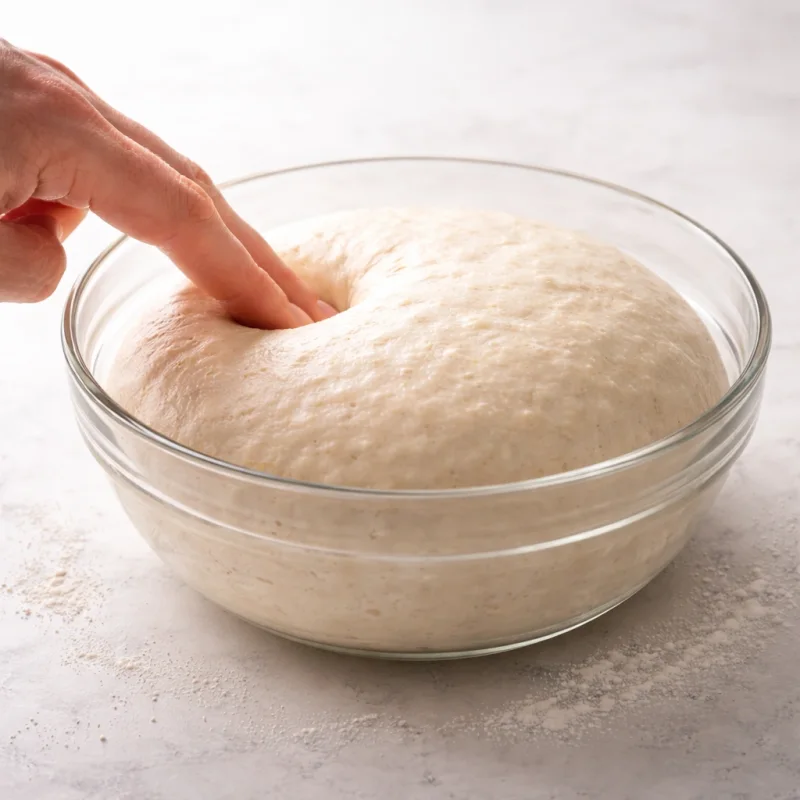
Not every dough must double. Combine several signals: increased volume, visible bubbles, a lighter feel, surface tension and the ability to hold shape. A poke test can help with some shaped wheat doughs during final proof, but it is not a universal meter for wet, rich, wholegrain or cold doughs.
If the dough barely moves at all, first troubleshoot why dough does not rise.
If dough is moving too fast
Cool it down or refrigerate it. Do not add flour merely to slow the yeast. For the next bake, reduce yeast, use cooler water or shorten the warm phase before refrigeration.
For repeatable baking, record four things: yeast quantity, dough temperature after mixing, fermentation time and the actual condition of the dough at the end of each stage. Those notes reveal far more than a timer alone.
Frequently asked questions
Answers to common questions
Why does dough taste sour even though it rose well?
With dough leavened only by baker's yeast, strong sourness should not automatically be blamed on the yeast. Check very long or warm fermentation, sourdough or old-dough additions, and storage conditions.
How do I know when dough is proofed enough but not too far?
Combine volume increase, bubbles, aeration, surface tension and the dough's ability to hold shape. The poke test is a supporting clue for some shaped wheat doughs, not a universal rule.
What speeds yeast activity most?
Dough temperature, yeast quantity and yeast vitality are major controls. Warmer dough within a useful range ferments faster; very high sugar levels can slow ordinary baker's yeast.
Can I use less yeast and still get good volume?
Yes, if you allow more time and the dough structure can retain the gas. Less yeast usually means a slower process, not necessarily a smaller final loaf.
When is cold fermentation useful?
When you want to slow the process, fit baking into a schedule or extend flavour development. Refrigeration slows fermentation strongly but does not stop it completely.
How do salt and sugar affect yeast?
Salt normally slows fermentation. Added sugar is not required in a lean wheat dough, and high sugar can slow yeast through osmotic stress.
What should I do if dough is rising too fast?
Move it somewhere cooler or refrigerate it. Do not add flour just to slow fermentation. Next time use less yeast, cooler mixing water or a shorter warm phase.