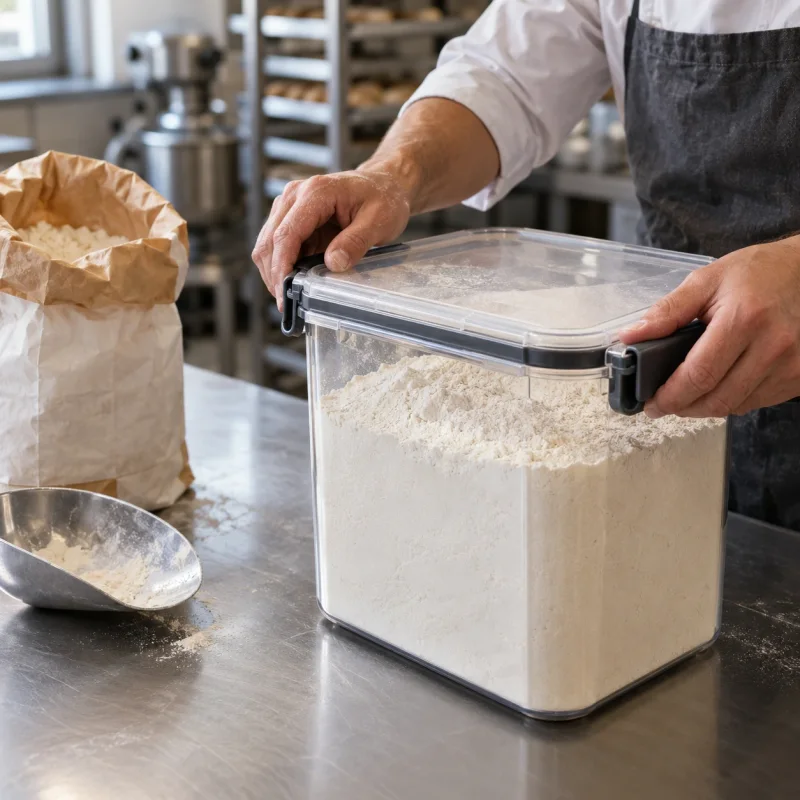
How to store flour so it stays fresh
The most reliable rule is simple: keep flour sealed, cool, dry, and away from light. That protects it from moisture, kitchen odors, and most pantry-pest problems. Refined white flour is relatively stable under normal pantry conditions. Whole-grain, rye, and high-fat flours deteriorate faster because their natural oils oxidize, so refrigeration or freezing makes more sense when they will be stored for longer.
A paper flour bag is useful packaging, but once opened it is not a strong long-term barrier. You can place the whole bag inside a tightly sealed food container or transfer the flour into a clean container. If you decant it, keep the best-by date and product information from the original package.
Pick the storage location before the container
The cabinet above the stove is convenient but usually a poor choice. Heat, steam, and repeated temperature swings shorten quality life. A cool pantry or cupboard away from the oven, dishwasher, radiator, and direct sun is better.
A good flour container should be:
- completely clean and dry;
- food-safe;
- tightly closing;
- large enough to scoop or pour without constantly spilling flour.
Glass, metal, and good food-grade plastic can all work. The seal and the storage environment matter more than the material itself.
White flour and whole-grain flour age differently
| Flour type | For regular use | For longer storage | Why |
|---|---|---|---|
| Refined white wheat flour | sealed in a cool, dry, dark pantry | freezer if you want to preserve quality for a long time | much of the oil-rich germ is removed |
| Whole-wheat flour | buy smaller amounts and keep cool | refrigerator or freezer in airtight packaging | the germ and outer grain layers contain more fat |
| Rye, oat, and other fuller-grain flours | use a sensible rotation | chill or freeze if they will sit for a long time | composition and oil content vary |
| Almond and other nut flours | avoid long room-temperature storage | refrigerator or freezer | high fat content makes rancidity a bigger concern |
These are storage strategies, not universal expiration dates. The manufacturer's instructions and the date on the package come first. After opening, temperature, humidity, container cleanliness, and how often the flour is exposed to room air all matter.
Preventing flour bugs, moths, and weevils
Pantry pests can arrive in food before you bring it home, or they can spread from another dry product in the cupboard. Finding them does not automatically mean the kitchen is dirty.
The strongest prevention is practical:
- inspect dry goods regularly;
- use older flour before opening a new bag;
- avoid buying more than you can reasonably rotate;
- keep opened dry goods tightly sealed;
- clean up flour dust and crumbs promptly.
Some bakers freeze newly purchased flour for several days as an extra measure against insects that may already be present in an early life stage. This can be useful, but it is an additional barrier, not a replacement for sealed storage and pantry inspection.
Bay leaves, cloves, and other strongly scented pantry remedies are often recommended as repellents. They should not be treated as dependable pest control. If you use them, consider them secondary to good containers and sanitation.
What to do if you find webbing, larvae, or insects
Discard flour that contains visible insects, larvae, cocoons, or fine webbing. Sifting does not reliably turn infested flour back into a clean product.
Check neighboring dry foods as well: rice, pasta, cereal, oats, nuts, seeds, dried fruit, and baking ingredients. Empty the cupboard, vacuum shelf-pin holes, seams, corners, and cracks, then clean the surfaces and allow them to dry completely before restocking.
Pheromone traps can be useful for monitoring pantry moth activity. They do not remove contaminated food or replace cleaning the source of an infestation.
Using the refrigerator or freezer without adding moisture
Whole-grain and nut flours benefit most from cold storage. Keep them tightly sealed so they do not absorb refrigerator odors or moisture.
With frozen flour, one detail matters: leave the container closed while the flour warms toward room temperature. That reduces condensation on the cold flour. If you are making yeast or sourdough bread, remember that very cold flour also lowers dough temperature and can slow fermentation unless you compensate with warmer water or more time.
How to tell when flour is no longer worth using
Fresh flour should smell mild and characteristic of its grain. Warning signs include:
- a rancid, bitter, musty, or otherwise unusual odor;
- visible insects, larvae, or webbing;
- mold or suspicious discoloration;
- damp, hard clumps combined with an off smell.
If those signs are present, discard the flour and inspect the rest of your dry storage.
How long does flour last?
Refined flour generally keeps its quality longer than whole-grain flour. Whole-grain flour contains more of the oil-rich germ, so oxidation becomes noticeable sooner. Instead of relying on one universal number of months, use three checks: the best-by date, the manufacturer's storage guidance, and the flour's actual condition.
A best-by date is mainly a quality marker, not the same as a use-by safety date. Properly stored flour may still be usable after that date, but pests, mold, or a clearly rancid smell override the calendar.
A simple PEK storage system
Use one clean container for each flour, label the date, rotate older stock first, and buy quantities that match how often you bake. For refined white flour, the priority is a cool, dry, sealed pantry. For whole-grain and high-fat flours, add cold storage when turnover is slow.
That approach protects flavor and gives you more predictable baking performance without pretending that every flour has the same shelf life.
Diagnostics
Common problems and solutions
Fine webbing or larvae appear in the flour.
Cause: Pantry moths or another stored-food pest.
Solution: Discard the flour, inspect nearby dry goods, vacuum cracks and clean the storage area.
Whole-grain flour smells bitter or like old oil.
Cause: Oxidation of natural grain oils.
Solution: Discard it; buy smaller quantities and use colder storage next time.
Moisture appears after opening very cold flour.
Cause: Condensation.
Solution: Keep the container closed until the flour has warmed toward room temperature.
Technical terms
Terms worth understanding
- Rancidity
- An undesirable change in smell and flavor caused largely by oxidation of fats.
- Best-by date
- A quality date indicating when the product is expected to retain its typical characteristics under proper storage.
Frequently asked questions
Answers to common questions
Does opened flour need to be refrigerated?
Not always. Refined white flour can be kept in a cool, dry pantry; whole-grain and high-fat flours benefit more from refrigeration or freezing when stored longer.
Can flour be frozen?
Yes. Seal it well, and after freezing let the closed container warm before opening to reduce condensation.
How can I tell if flour has pantry moths?
Look for larvae, small moths, cocoons, or fine webbing. Discard affected flour and inspect other dry foods.
Do bay leaves keep flour bugs away?
Do not rely on them as primary control. Sealed containers, stock rotation, and cleaning are much more dependable.
Is flour automatically bad after the best-by date?
No. For a dry product, the date is mainly about quality. Storage conditions, smell, appearance, and pest activity still need to be checked.
What is the worst place to store flour in the kitchen?
Above or right next to the oven, beside the dishwasher, or on a sunny windowsill. Those areas are more exposed to heat, steam, light, or temperature swings. A cool, dry, dark cupboard away from heat sources is a better choice.