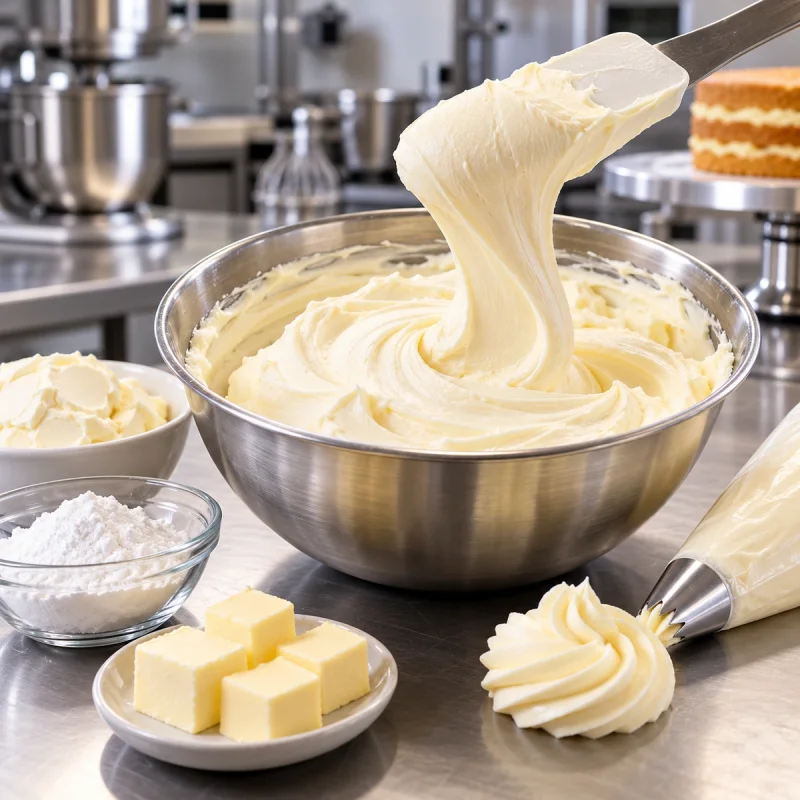
Mascarpone frosting without heavy cream is completely workable, but it is not the same frosting as classic whipped mascarpone cream with one ingredient simply removed. Heavy cream normally contributes both air and part of the structure. Once it is gone, the right formula depends on the job: a dense filling, a smooth coating, or a piped finish that needs to hold a clean edge.
For dessert cups, a thin filling, or a simple spread, mascarpone, powdered sugar, and vanilla can be enough. If the frosting must hold taller piping, sharper cake edges, or more weight, a mascarpone butter frosting is more dependable because butter provides structural support that whipped cream would otherwise help create.
Choose the job before you choose the formula
| What you need | Better cream-free formula | Texture | Limitation |
|---|---|---|---|
| dessert cups, light filling, thin coating | mascarpone + powdered sugar | dense, creamy, only slightly aerated | not designed for tall piping or heavy layers |
| cake coating and low decorative piping | mascarpone + butter + powdered sugar | smooth, more plastic, more supportive | still temperature-sensitive |
| tall cake, transport, warm room | evaluate the whole cake system | depends on the structure | “without heavy cream” alone does not prove stability |
Simple mascarpone frosting without heavy cream
A practical starting point:
- 500 g mascarpone
- 60–80 g sifted powdered sugar
- 1 teaspoon vanilla paste or extract
- a small pinch of salt, optional
Keep the mascarpone cold, but make sure it is pliable enough to spread smoothly with a spatula. If it is very firm straight from the container, do not beat it for several minutes just to soften it. Fold it a few times with a spatula, add the sifted sugar and vanilla, then mix on low speed only until the frosting is uniform.
The goal is not to whip in a lot of air. Stop when the spatula leaves a wide, smooth trail with no obvious white chunks or greasy streaks.
This frosting will be denser and less airy than mascarpone whipped cream. That is expected. It works well in dessert cups, as a thinner layer between light cake layers, or as a simple top coating. If a tall spoonful slowly slumps within seconds, do not try to turn this formula into a piping frosting simply by adding more and more sugar.
For coating and piping: mascarpone butter frosting
When you need cleaner edges and more support, use butter:
- 250 g unsalted butter
- 250 g mascarpone
- 120–170 g sifted powdered sugar
- 1 teaspoon vanilla
- a pinch of salt
The butter should be plastic, not greasy: soft enough to dent with a finger, but not shiny or close to melting. Beat the butter, powdered sugar, vanilla, and salt until smooth and slightly lighter. Add the mascarpone only after this stage.
Add mascarpone in three or four portions at low to medium-low speed. Mix after each addition only until the pale streaks disappear. Once the final portion is incorporated, stop. Extra beating does not create extra stability.
If your problem is lumps, graininess, or overmixing in a classic version, use the guide to smooth mascarpone frosting without lumps.
Test one rosette before decorating the whole cake
Pipe one rosette onto a cold plate or parchment and leave it for a few minutes at the temperature where you will actually decorate. A useful result has a defined edge, a peak that does not collapse, no greasy sheen, and a texture that feels plastic rather than brittle when lightly touched.
If the rosette slumps immediately, check temperature first. A warm frosting may only need brief chilling. If it is cold but still cannot hold its shape, the issue is more likely the formula or the job you are asking it to do—not a need for more beating.
“Without heavy cream” does not mean dairy-free
Mascarpone is a fresh dairy product. Removing heavy cream does not make the frosting dairy-free, vegan, or automatically lactose-free. If the reason for avoiding cream is an allergy or a strict dairy-free diet, you need a different recipe system rather than this substitution.
Why the structure is different
In classic whipped mascarpone frosting, some volume and lightness come from whipping the cream. In the simple cream-free version, that mechanism is absent. Mascarpone and sugar create a dense, low-aeration mixture. If you need greater mechanical support, another component must provide it; in the butter version, properly conditioned butter fills that role.
Three quick checks before use
Spatula test: Drag a spatula through the frosting. The channel should stay smooth and visible. If it closes immediately, the frosting is probably too soft for a thick layer.
Dollop test: A simple mascarpone-sugar frosting may settle slightly, but it should not turn into a puddle. The butter version should hold noticeably better.
Load test: Place a small amount between two cake scraps and press gently. If the filling immediately squeezes to the edge, a full cake will not reduce that load.
Common problems
| Symptom | More likely cause | First action |
|---|---|---|
| smooth frosting spreads on the cake | frosting is too warm or formula is too weak for the task | chill and retest; use the butter version for piping |
| fine grainy texture | overmixing or ingredients in very different physical states | stop mixing; check a small sample after brief chilling |
| greasy surface | fat phase is beginning to separate | stop beating and reassess after a short chill |
| piped edge slumps | not enough structure or room is too warm | adjust formula or temperature, not just sugar |
Refrigeration is still required
Mascarpone is perishable. Keep finished frosting and cake refrigerated at 4 °C / 40 °F or below, and follow the shortest storage guidance among the ingredients you used. A butter-rich version may hold its shape better at room temperature, but that does not make it suitable for extended unrefrigerated storage.
PEKI recommend: build the structure first
For a creamy filling without heavy cream, start with the simple mascarpone-and-sugar version. For sharp edges, a smoother coating, or piping, use the mascarpone butter formula and test one rosette before decorating the entire cake.
The core rule is simple: without heavy cream does not mean without structure. It means the structure has to come from somewhere else.
Frequently asked questions
Answers to common questions
Can I simply leave the heavy cream out of a classic mascarpone cream?
Not if you expect the same volume and structure. Removing whipped cream changes the stability mechanism, so choose a formula based on the job.
Is simple mascarpone cream without heavy cream suitable for cake filling?
Yes, for thinner layers between lighter cake layers. For heavier or taller cakes, run a small load test and use the butter version if needed.
Which version is better for piping?
The mascarpone-butter version. Butter provides more mechanical support at the right temperature, so rosette ridges stay more defined.
Does no heavy cream mean dairy-free or lactose-free?
No. Mascarpone is a dairy product, so the cream still contains dairy and is not automatically lactose-free.