Tapioca is not one single ingredient: check what the recipe actually calls for
When a package says tapioca, the first question is which form you have. In baking, the usual ingredient is tapioca starch. Many brands and recipes also call the same refined product tapioca flour. It is the purified starch extracted from cassava root. Tapioca pearls are shaped products made from that starch, while cassava flour contains more of the whole root and behaves very differently in a batter or dough.
So the safest starting rule is simple: if a recipe calls for tapioca starch, do not automatically reach for cassava flour or tapioca pearls. First identify whether the starch is supposed to thicken, bind water, improve flexibility in a gluten-free crumb, or create a distinctive chewy and stretchy texture.
In gluten-free baking, tapioca starch is usually one part of a system rather than a stand-alone replacement for wheat flour. If you are building a flour blend, start with the broader guide to replacing wheat flour in gluten-free baking.
Tapioca starch, tapioca flour, pearls and cassava flour – the quick difference
| Label or recipe term | What it usually means | Direct substitute for tapioca starch? |
|---|---|---|
| Tapioca starch | Refined starch extracted from cassava | Yes – this is the reference ingredient in this article |
| Tapioca flour | Often another market name for tapioca starch | Usually, but check the ingredient declaration |
| Tapioca pearls / balls | Shaped, partly processed tapioca starch | No; mainly intended for puddings and drinks |
| Cassava flour | Flour made from more of the processed root | Not at the same amount; it absorbs water differently and changes structure |
| Fermented / sour cassava starch | Fermented starch with different baking behaviour | No; used for specific expansion and stretch |
This distinction matters more than the name on the front of the bag. Labelling varies by market and manufacturer, so read the ingredients and product description before you bake.
What tapioca starch does in dough, cake and fillings
When a gluten-free cake crumbles after cooling or a dough lacks flexibility, the problem is often not the flour alone. The balance between flours, starches, liquid and binders matters. Tapioca starch binds some of the water, gelatinises during heating and can improve cohesion, softness and flexibility in the crumb.
At the right level, it helps connect the fine particles of other gluten-free flours and starches. The crumb can feel less sandy and break less when sliced. Too much tapioca, however, can make it gummy, damp-feeling or unpleasantly stretchy.
Tapioca does not create a gluten protein network. In bread, yeast doughs and taller cakes it therefore has to work with other flours, eggs, proteins or hydrocolloids.
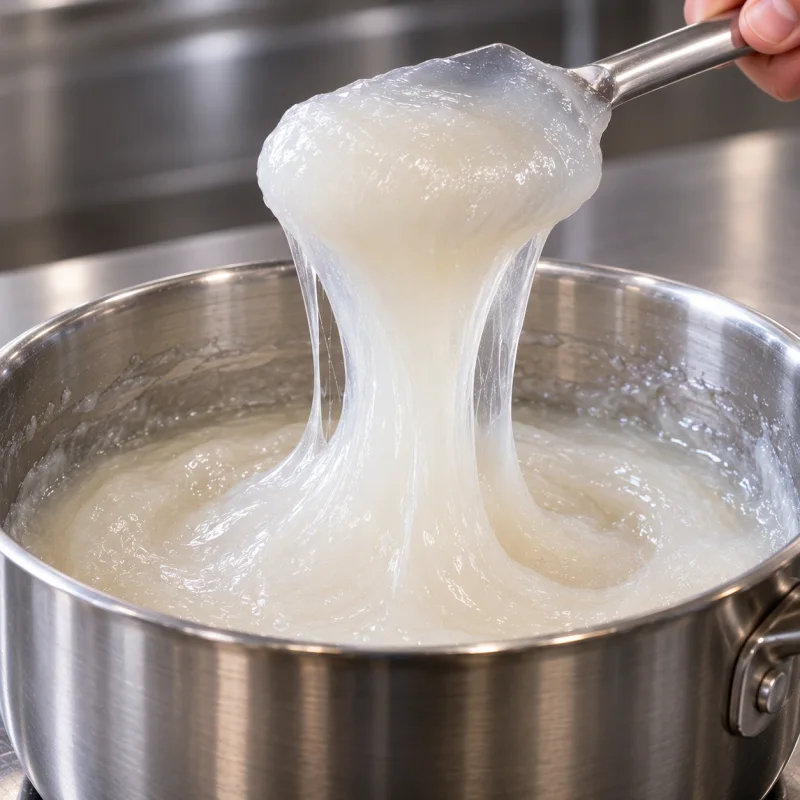
In creams, fruit fillings and glazes, tapioca starch creates a smooth, often fairly clear and slightly elastic thickened phase. Ratios from baking should not be transferred blindly to cooked fillings: different starches have different thickening power, clarity and behaviour as they cool.
The best substitute depends on what tapioca is doing in the recipe
Do not choose a replacement just because two white powders look alike. Match the substitute to the job.
| Role of tapioca starch | Sensible first candidate | What is likely to change |
|---|---|---|
| Small proportion in a gluten-free cake or muffin blend | Potato starch | Slightly less flexibility; crumb may be more fragile |
| Cookies and crisp bakes | Cornstarch or rice starch | Drier, cleaner snap and less stretch |
| Fruit filling or glaze | Arrowroot or cornstarch | Different clarity and gel firmness |
| Cooked pastry cream | Cornstarch | Firmer, more opaque structure with less elasticity |
| Gluten-free bread or pizza | Adjust the full flour blend | Water demand, flexibility, volume and slicing all change |
| Recipe where tapioca is the main ingredient | No universal direct substitute | Characteristic chew, stretch and volume change substantially |
Potato starch: a useful first test in a blend
Potato starch is a sensible candidate when tapioca makes up only a small part of a gluten-free flour blend. For a first test you can begin with a similar weight, but that is not a universal 1:1 rule for every recipe. Judge the batter and, most importantly, the fully cooled texture.
If the mixture becomes noticeably stiffer, add liquid only in small increments. If the finished bake crumbles, do not assume it simply needs more water: check baking time, the total starch proportion and the binder level as well.
Cornstarch and rice starch: firmer, less flexible results
Cornstarch or rice starch can be useful when you want a drier, more brittle or crisper result. That can work well in cookies, thin bases and some short doughs, but it is less suitable where the crumb needs to stay flexible.
Cooked creams and fillings need their own ratios. Starches do not have identical thickening strength and they respond differently to heat and cooling.
Arrowroot: when clarity matters in a fruit filling
Arrowroot is useful in fruit sauces and fillings where a clearer appearance is desirable. It is not automatically the superior option: prolonged heating, acidity and the rest of the formula can all change the final viscosity.
How to test a substitute without wrecking the recipe
A small controlled test is the most reliable approach.
- Weigh in grams. Spoon-for-spoon swaps are less reliable because different starches pack differently.
- Change one starch only. Do not alter the eggs, liquid and flour at the same time.
- Watch the raw batter or dough. Compare whether it is looser, stiffer or stickier than the original.
- Bake a small test portion. It is faster than trying to rescue a full batch.
- Judge only after complete cooling. Starch-based crumb continues to firm and redistribute water as it cools.
If the bake is dry and crumbly after the swap, check overbaking and the total starch level first. If the crumb is gummy and sticks to the knife, there may be too much starch or the product may still be too warm.
When a direct substitution does not work
If tapioca makes up most of the formula, the same weight of cornstarch or potato starch will usually not produce the same product. This is especially true when the intended texture is markedly chewy, stretchy or hollow.
Be particularly careful with recipes that call for fermented or sour cassava starch. Fermentation changes the baking behaviour, so ordinary tapioca, cornstarch and potato starch are not equivalent replacements.
Cassava flour should not be treated as an automatic substitute either. Because it contains more of the root, including more fibre and other solids, it changes water absorption and structure. That is a reformulation, not a simple one-ingredient swap.
Is tapioca starch gluten-free?
Pure tapioca starch comes from cassava and is naturally gluten-free. That does not automatically make every product suitable for someone with coeliac disease, because manufacturing, packaging and cross-contact still matter.
If you are baking for someone with coeliac disease, choose a product clearly labelled “gluten-free” and check work surfaces, mixers, tins and the rest of the ingredients. In the European Union, the term “gluten-free” may be used for foods containing no more than 20 mg of gluten per kilogram.
What to choose in practice
If a recipe uses a small amount of tapioca starch to improve flexibility in a gluten-free dough or batter, potato starch is a sensible first test, with the final decision made after cooling. Cornstarch or rice starch often suit a crisper, more brittle result. For fruit fillings, choose according to the clarity and firmness you want.
If tapioca is the main driver of the product's characteristic chew or stretch, do not look for a blind 1:1 swap. Rebalance the full formula of flour, starch, binder and liquid instead.
Diagnostics
Common problems and solutions
The gluten-free cake is dry and crumbly after the swap.
Cause: The starch-to-liquid balance changed or the product was overbaked.
Solution: Check baking time and the total starch proportion first; then change only one ingredient in a small step.
The crumb is gummy and sticks to the knife.
Cause: The starch proportion is too high or the bake has not cooled fully.
Solution: Judge the cut only after complete cooling; next time reduce the starch proportion and increase the appropriate structural part of the blend.
The dough became heavy after using cassava flour.
Cause: Cassava flour is not refined tapioca starch and it binds water differently.
Solution: Return to tapioca starch or treat the recipe as a new formula with a different balance of liquid and dry ingredients.
The filling is cloudy or much firmer after the swap.
Cause: The replacement starch created a different thickened structure.
Solution: Use a ratio designed for that specific starch and target the cooled final texture, not just the hot viscosity.
Technical terms
Terms worth understanding
- Tapioca
- Starch and processed starch products made from cassava root; in cooking, the term can include fine starch, pearls and other forms.
- Tapioca starch
- Refined starch extracted from cassava root, used for thickening and gluten-free baking.
- Cassava flour
- Flour made from more of the processed cassava root; because it contains fibre and other solids, it is not equivalent to refined tapioca starch.
- Gelatinisation
- The change in starch granules during heating with water, when they swell and increase the viscosity of the mixture.
- Hydrocolloid
- A binder such as xanthan or guar that increases viscosity and helps build structure in gluten-free doughs and batters.
Frequently asked questions
Answers to common questions
What is tapioca?
Tapioca is starch or a group of processed starch products made from cassava root. In baking, the term usually means fine tapioca starch, although pearls and other forms are also sold.
Are tapioca flour and tapioca starch the same ingredient?
On many packages they are two names for the same refined cassava starch. Cassava flour is a different product, so always check the ingredient declaration.
Are tapioca pearls the same as tapioca starch?
They come from the same starch, but pearls are a shaped processed product and are not a direct substitute for fine starch in doughs, batters or creams.
What can I substitute for tapioca starch?
For a small proportion in a gluten-free blend, potato starch is a sensible first test. Cornstarch or rice starch can suit a crisper result. For thickening and recipes where tapioca creates the characteristic chew, there is no universal replacement.
Can I substitute cassava flour for tapioca starch?
Not directly in the same amount. Cassava flour contains more components of the root and absorbs liquid differently, so the entire formula has to be adjusted.
Is tapioca starch gluten-free?
Pure tapioca starch is naturally gluten-free. For someone with coeliac disease, still choose a product clearly labelled “gluten-free” and prevent cross-contact.