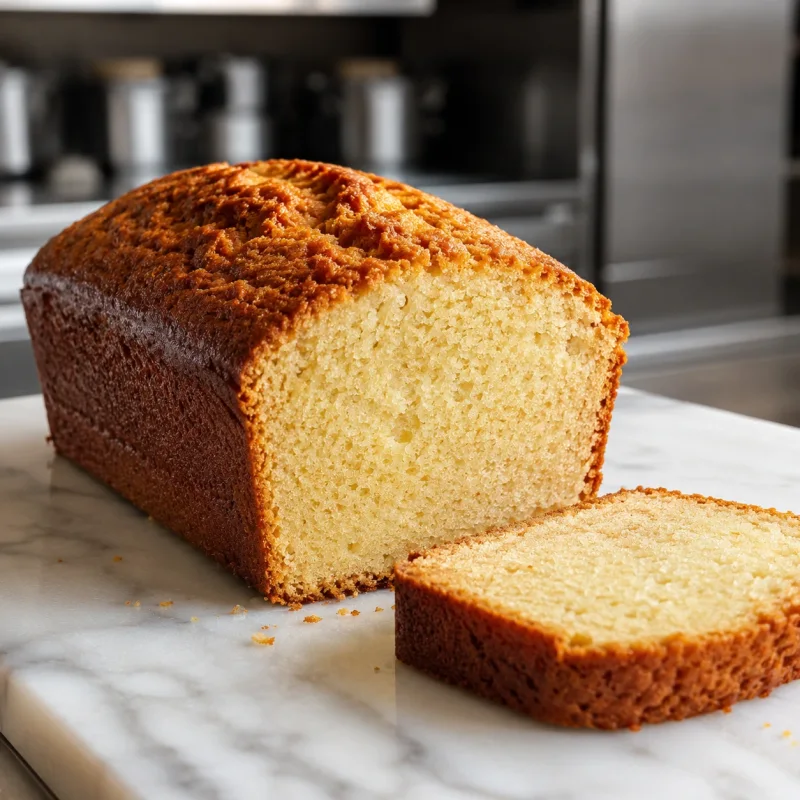
Vegan baking works when you replace the function, not just the ingredient
A batter can look smooth and pleasantly thick after mixing, then behave very differently in the oven: the centre sinks, the crumb sticks to the knife, cookies spread into thin discs, or a cake stays pale and dense. The problem usually is not simply that the recipe contains no eggs or dairy. The problem appears when an ingredient is removed but the job it performed is left unfilled.
That is why successful vegan baking is not a matter of swapping an egg for a banana, butter for oil, and milk for a plant-based drink one-for-one. First decide what the replacement has to do: bind flour and liquid, stabilise air bubbles, emulsify fat, hold water, support browning, or set during heating. The reliable sequence is: identify the function, choose the replacement, then check batter consistency and the stability of the crumb after cooling.
In conventional baking, an egg contributes water, proteins, emulsifiers, and foaming capacity at the same time. During baking, its proteins set, starch gelatinises, and a fluid batter becomes a stable porous structure. No plant-based substitute performs all of those jobs equally well, so the replacement has to match the type of bake.
What is the egg doing in this specific recipe?
In thin, crisp cookies, egg mainly binds the dough, contributes water, and affects spread. In muffins and cakes, it helps retain gases and set the crumb. In foam cakes, creating and stabilising air is central. In a cream or filling, egg may act as an emulsifier, thickener, or source of heat-setting proteins.
That is why the same substitute cannot give the same result in every bake:
- ground flaxseed or chia seed binds water well but does not create a light foam;
- starch thickens and firms the crumb but cannot emulsify a large amount of fat;
- fruit purée adds moisture and pectin but often increases density and changes flavour;
- plant-based yoghurt adds water, viscosity, and acidity but does not replace egg white's foaming capacity;
- aquafaba can create foam and assist emulsification, but its performance depends on the concentration of dissolved solids.
For every recipe, identify the primary role of the ingredient you are removing before choosing its replacement.
Starting ratios are not universal rules
Starting ratios are for adjustment, not blind multiplication. For denser batters and doughs, you can begin with 7 g finely ground chia or flaxseed and about 40 g water, then adjust for the seed's absorption, the flour, and the rest of the formula's liquid. Flax or chia gel is best suited to denser mixtures, plant-based yoghurt and purée increase moisture, while aquafaba mainly takes over the foaming role of egg white.
Water binding must be strong enough, but not excessive
Vegan batters often become dense because too much hydrocolloid, seed, or starch has been added. These ingredients bind water and increase viscosity, which initially seems useful. But if the batter becomes too thick, air bubbles cannot expand sufficiently as it heats. The crumb stays low and heavy and may look wet when cut even after enough baking time.
Use chia or flax gel mainly where the mixture needs cohesion: muffins, chocolate cakes, quick cakes, and softer cookies. In a very light sponge-style cake, a large dose of gel can hold too much water and increase density.
For muffins, the batter should fall from a spatula in a slow, thick ribbon. If it sits in place like a soft dough, it is often too thick. If it flows like pancake batter, flour particles are harder to keep evenly suspended and gas bubbles escape more quickly.
The decisive factors are not only the amount of chia or flax, but total water, hydration time, and batter consistency before baking.
After adding flour, mix only until dry streaks disappear. Longer mixing develops more gluten while also knocking air out of the batter. The result can be an elastic, chewy crumb instead of a light structure.
Fat controls spread, aeration, and mouthfeel
Solid fat and liquid oil do not behave the same way in a batter or dough. Soft margarine or another plastic fat can trap tiny pockets of air when creamed with sugar. Oil cannot do that, but it coats flour particles very effectively and limits formation of a tough gluten network. This is why oil-based cakes are often soft and moist, while cookies may spread more.
If a recipe relies on creaming solid fat, do not replace it with liquid oil by weight alone. In denser oil-based cakes, around 80–85 g oil plus 15–20 g plant-based drink or water for each 100 g butter can be used only as an initial mass balance for fat and water, not as a functionally equivalent substitution. Check the fat percentage on the margarine you use and judge the dough itself, because products vary substantially.
The physical state of the fat is especially important in cookies. Liquid oil increases mobility, so cookies can spread before starch and proteins have set enough to hold their shape. A solid vegan fat limits spread and helps produce a cleaner edge.
Fat does far more than provide a sense of richness. Whether it is crystalline or liquid affects air retention, emulsification, spread, and the final firmness of the bake.
Air has to be created first, then retained
Baking powder and baking soda do not make a cake light on their own. They create gas. The batter needs the right viscosity to hold that gas until starch and proteins set during baking.
If the batter is too thin, bubbles quickly merge and escape. If it is too thick, they cannot expand. If the structure is too weak, the cake rises in the oven and then collapses as temperature drops.
If a recipe does not contain clearly acidic ingredients, use baking powder, which already includes the required acid component. Use baking soda only when the formula contains enough acid, such as plant-based yoghurt, lemon juice, vinegar, molasses, or appropriately acidic natural cocoa. Too much baking soda leaves an alkaline, slightly soapy taste, can produce unusually dark browning, and dulls other flavours.
Whip aquafaba in a completely clean bowl with no trace of fat. The foam should be smooth and dense, with no large layer of liquid at the bottom. Fold it into the batter in two or three additions: the first portion can be mixed in more firmly to lighten the base, then fold in the rest with a spatula. The final batter should remain homogeneous. White lumps of foam are not proof of gentle mixing; they mean the structure is unevenly distributed.
Aquafaba has foaming and emulsifying ability, but its physical properties are not constant. Concentration, pH, cooking method, and the ratio of pulses to water all affect foam volume and stability.
Plant-based milk is not just replacement liquid
Almond, oat, soy, and other plant-based drinks differ in protein, fat, starch, sugars, and stabilisers. Two drinks used at the same volume therefore do not necessarily produce the same batter viscosity, crust colour, or emulsion stability.
Soy drink generally supports emulsification and browning better than a very thin almond drink because it tends to contain more protein. Oat drinks may contain more broken-down starch and sugars, increasing sweetness and changing viscosity. Almond drink is often thinner and lower in protein and fat, but vigorous mixing can still create persistent surface bubbles.
So when changing the plant-based drink, do not adjust the recipe by volume alone. Watch the batter. If it becomes noticeably thicker after resting for a few minutes, the drink or flour has bound more water. Add liquid in 5–10 g increments until the batter reaches the required consistency.
A golden crust needs heat, sugar, and available protein
A vegan bake can be fully cooked and still remain pale. Eggs and dairy products in conventional recipes contribute proteins and sugars that take part in non-enzymatic browning. Removing them changes the balance of reactive compounds on the surface.
The Maillard reaction occurs between reducing sugars and available amino groups. Its rate is affected by temperature, pH, water content, and surface composition. A higher pH generally speeds browning, but adding excessive baking soda is not a good solution because it changes the flavour, colour, and structure of the whole bake.
Brush yeasted pastries or rolls with a very thin layer of unsweetened soy drink. For slightly stronger colour, dissolve 1–2 g sugar or syrup in 20 g of the drink. Keep the coating thin; puddles at the edges brown faster than the rest of the surface.
For cakes, do not let colour alone dictate oven temperature. Excessive heat dries the edge before the centre has stabilised. If the surface darkens too early, move the bake to a lower rack in good time rather than only near the end. You can reduce the temperature by about 10–15 °C (18–27 °F) and extend the time appropriately, but verify the change on the next bake. The correct setting depends on pan size, material, and the behaviour of your oven.
Crust colour can mislead you.
A dark surface does not prove that the centre is baked through, and a pale surface does not necessarily mean the cake is raw.
Adjust one function at a time
When converting a conventional recipe, change one function at a time and record the result. First note the mass of eggs, milk, and fat. Then determine how much water, fat, and structure-building material you lose when those ingredients are removed.
On the first test, do not simultaneously change the eggs, flour, sugar, fat, and leavening system. If the outcome changes, you will not know which decision caused the problem.
Use this sequence:
- choose the substitute according to the egg's main function;
- balance the total amount of liquid;
- choose liquid or solid fat according to the texture you want;
- check the acid and the type of leavener;
- assess batter consistency before baking;
- after the first bake, change only one variable.
If the crumb is wet and dense, do not immediately add 20 minutes of baking time. Check whether the batter contained too much water or binding gel. Longer baking may dry out the edge without correcting a poorly balanced centre.
If the bake is dry and crumbly, do not automatically add more oil either. Crumbling can come from insufficient binding, too much starch, too little liquid, or overbaking. Fat improves mouthfeel, but it cannot create a load-bearing network by itself.
The result can only be judged properly after cooling
A hot vegan cake is often softer and more fragile than a conventional cake made with eggs. Starch, hydrocolloids, and fat continue to change the structure as the cake cools. Cut it immediately and the crumb can compress under the knife and look raw even though it would stabilise after cooling.
For muffins and smaller cakes, check three signals: the centre slowly springs back after a light touch, a wooden skewer has no liquid batter on it, and the edge is stable rather than wobbling separately from the centre. A few moist crumbs are acceptable; a smooth sticky smear of raw batter is not.
Leave a larger cake in the pan for about 10–20 minutes after baking, then transfer it to a rack. Let it cool completely before slicing. If a thick layer still sticks to the knife once cool, reduce the total liquid or the amount of binding gel next time. If it breaks into dry crumbs, shorten the bake or increase binding and hydration.
Before the next test, record ingredient weights, pan size, oven temperature, baking time, and the condition of the cut crumb. That turns random ingredient swapping into controlled recipe development.
Diagnostics
Common problems and solutions
The cake rises in the oven, then the centre sinks and stays sticky.
Cause: Too much liquid or binding gel and the load-bearing structure does not set quickly enough.
Solution: Reduce liquid or gel, check the leavener, and cool the cake completely before slicing.
Cookies spread into thin, greasy discs.
Cause: Solid fat was replaced one-for-one with liquid oil, or the dough was too warm.
Solution: Reduce the oil, use some solid vegan fat, and chill shaped dough before baking.
The crumb is heavy, rubbery, and nearly poreless.
Cause: Too much hydrocolloid or starch made the batter too thick, while excess mixing developed more gluten.
Solution: Reduce the binder, add liquid gradually, and after adding flour mix only until dry streaks disappear.
The bake is cooked but remains very pale.
Cause: The surface contains fewer available proteins and sugars for browning or is too wet.
Solution: Use a thin soy-milk wash, optionally with a small amount of sugar, and bake in a fully preheated oven.
The cooled cake crumbles and slices do not hold together.
Cause: Insufficient binding or liquid, or the cake was overbaked.
Solution: Increase binder or liquid in 5–10 g increments and check doneness a few minutes earlier next time.
Technical terms
Terms worth understanding
- Hydrocolloid
- A substance that swells or gels in water, increasing viscosity and helping retain moisture.
- Emulsion
- An even mixture of water and fat phases that tends to separate without an effective emulsifier.
- Aquafaba
- The cooking or canning liquid from pulses, most commonly chickpeas, which can foam and assist emulsification.
- Starch gelatinisation
- The process in which starch swells with water under heat and helps set the crumb.
- Maillard reaction
- Heat-driven browning between certain sugars and amino groups that creates colour and roasted flavours.
Frequently asked questions
Answers to common questions
Can I replace one egg with one banana in every recipe?
No. Banana contributes moisture, sugar, pectin, and flavour, but it does not create foam or the same heat-set structure as egg. It is better suited to denser cakes and muffins.
Which plant-based milk is best for baking?
Unsweetened soy milk is often useful for emulsification and browning, but the right choice depends on the bake. Choose oat or almond milk for flavour and composition, then adjust batter consistency as needed.
Can I use baking soda instead of baking powder?
Only when the recipe contains enough acid for the reaction. Without sufficient acid, baking soda can taste soapy, over-darken the surface, and disrupt leavening balance.
Why can vegan cake have a better texture the next day?
During cooling and resting, water redistributes and starches and binders continue to stabilise the crumb. The cake can therefore slice more cleanly several hours after baking.
Does vegan cake also mean gluten-free?
No. Vegan excludes animal-derived ingredients, not wheat, rye, barley, or other gluten sources. Gluten-free baking requires appropriate ingredients and cross-contact control.